
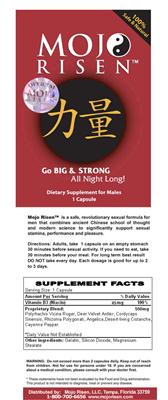
| Vitamin B3 (as Niacin) | 45 mg | 100% |
| Proprietary Blend (as Angelica, Cayenne Pepper, Cordyceps Sinensis, Deer Velvet Antler, Desert-living Cistanche, Polyrhachis vicina Roger, Rhizome Polygonati) | 550 mg | † |
Other ingredients: Gelatin, Silicon Dioxide, Magnesium Stearate
% Daily Values for: Adults and children 4 or more years of age.
Where this label comes from
An original label of the NIH's Dietary Supplement Label Database, entered there on 25 July 2012, shown here as it was entered. The NIH's record
General information
- Product name
- Mojo Risen
- Brand
- Mojo Risen
- Barcode (UPC)
- Not printed
- Net contents
- 1 Capsule(s)
- Market status
- Off market
- DSLD ID
- 11195
Classification
- Supplement form
- Capsule
- Product type
- Other Combinations
- Claim types on the label
- All Other, Structure/Function
- Intended for
- Adult Male (18-50 Years)
Label statements
Directions: Directions: Adults, take 1 capsule on an empty stomach 30 minutes before sexual activity. If you need to eat, take 30 minutes before your meal. For long term best result DO NOT take every day. Each dosage for up to 2 to 3 days.
Precautions: All Other: WARNING: Do not exceed more than 2 capsules daily.
Precautions: Children: Keep out of reach from children. Not for use by persons under 18.
Precautions: All Other: If you are concerned about a medical condition, please consult with your doctor first.
Brand information
Distributed by: Mojo Risen, LLC, Tampa, Florida
Labels only: each label is shown as printed on the bottle, with no grades, rankings or advice. A label in this database is not an endorsement of the product. Read the label on the bottle you buy: makers change their formulas. Reverse Age Lab is not affiliated with, or endorsed by, the National Institutes of Health or its Office of Dietary Supplements. The original labels come from the NIH’s public-domain data; the labels since are read by us. Search the Dietary Supplement Label Database.