
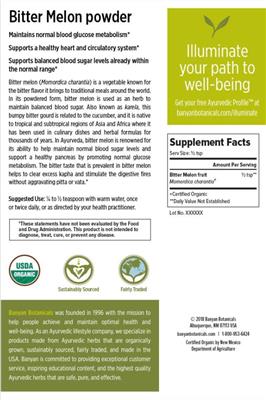
| Bitter MelonBitter Melon PlantPart: fruit Genus: Momordica Species: charantia Note: certified organic | 0.5 Teaspoon | † |
% Daily Values for: Adults and children 4 or more years of age.
Where this label comes from
An original label of the NIH's Dietary Supplement Label Database, entered there on 25 April 2019, shown here as it was entered. The NIH's record
General information
- Product name
- Bitter Melon Powder
- Brand
- Banyan Botanicals
- Barcode (UPC)
- Not printed
- Net contents
- N/A
- Market status
- On market
- DSLD ID
- 200335
Classification
Label statements
Formula: Contains: Bitter melon (Momordica charantia) is a vegetable known for the bitter flavor it brings to traditional meals around the world. In its powdered form, bitter melon is used as an herb to maintain balanced blood sugar.
Formula: Contains: In Ayurveda, bitter melon is renowned for its ability to help maintain normal blood sugar levels and support a healthy pancreas by promoting normal glucose metabolism.
Directions: Suggested use: 1/4 to 1/2 teaspoon with warm water, once or twice daily, or as directed by your health practitioner.
Brand information
Manufacturer: Banyan Botanicals, Albuquerque, NM, USA
More labels from Banyan Botanicals
Labels only: each label is shown as printed on the bottle, with no grades, rankings or advice. A label in this database is not an endorsement of the product. Read the label on the bottle you buy: makers change their formulas. Reverse Age Lab is not affiliated with, or endorsed by, the National Institutes of Health or its Office of Dietary Supplements. The original labels come from the NIH’s public-domain data; the labels since are read by us. Search the Dietary Supplement Label Database.