
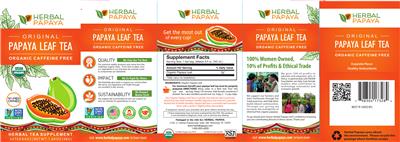
| organic Papaya | 2 g | † |
Other ingredients: organic Papaya
% Daily Values for: Adults and children 4 or more years of age.
Where this label comes from
An original label of the NIH's Dietary Supplement Label Database, entered there on 25 April 2019, shown here as it was entered. The NIH's record
General information
- Product name
- Original Papaya Leaf Tea
- Brand
- Herbal Papaya
- Barcode (UPC)
- 7 98304 17328 4
- Net contents
- 24 Tea Bag(s); 1.69 oz.; 48 Gram(s)
- Market status
- Off market
- DSLD ID
- 201460
Classification
- Supplement form
- Other (e.g. tea bag)
- Product type
- Botanical
- Claim types on the label
- All Other, Structure/Function
- Intended for
- Adult (18 - 50 Years), Kosher, Organic
Label statements
Formulation: Does NOT Contain: Organic caffeine free
Formulation: Does NOT Contain: Non-GMO
FDA Statement of Identity: Herbal Tea Supplement
Directions: For maximum benefit your papaya leaf tea must be properly prepared. Directions: Bring water to a flash boil. Pour into cup over tea bag. Steep 5-8 minutes. Add favorite sweetener if desired. Tea is also excellent served over ice. Enjoy 2 - 3 cups daily.
Formula: Contains: Our Organic Papaya Leaf Tea is a gentle and natural way to promote blood function and maintain healthy digestive and immune systems. Packed full of health benefits, Papaya leaf tea is a smooth well-rounded brew with a distinct slightly bitter personality.
Precautions: Pregnant or Nursing or Prescription Medications: If pregnant consult your prenatal care giver before drinking this tea.
Formulation: Does NOT Contain: Through our giving, we increase the availability of chemical free, organic papayas.
Brand information
Packaged in the USA for: Herbal Papaya, McKinney, TX
More labels from Herbal Papaya
Labels only: each label is shown as printed on the bottle, with no grades, rankings or advice. A label in this database is not an endorsement of the product. Read the label on the bottle you buy: makers change their formulas. Reverse Age Lab is not affiliated with, or endorsed by, the National Institutes of Health or its Office of Dietary Supplements. The original labels come from the NIH’s public-domain data; the labels since are read by us. Search the Dietary Supplement Label Database.