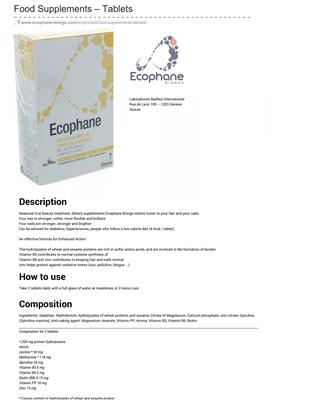
| Protein HydrolysatesProtein Hydrolysates Note: which | 1,200 mg | |
| Cystine | 92 mg | |
| Methionine | 118 mg | |
| Spirulina | 26 mg | |
| Vitamin B5 | 6 mg | |
| Vitamin B6 | 2 mg | |
| Biotin (as B8) | 0.15 mg | |
| Vitamin PP | 18 mg | |
| Zinc | 15 mg |
Other ingredients: Maltodextrin, Wheat Protein, Hydrolysate, Sesame, Hydrolysate, Magnesium Citrate, Calcium Phosphate, Zinc Citrate, Spirulina, Anti-Caking Agent
% Daily Values for: Adults and children 4 or more years of age.
Where this label comes from
An original label of the NIH's Dietary Supplement Label Database, entered there on 23 August 2019, shown here as it was entered. The NIH's record
General information
- Product name
- Ecophane
- Brand
- Biorga
- Barcode (UPC)
- Not printed
- Net contents
- 60 Tablet(s)
- Market status
- On market
- DSLD ID
- 206174
Classification
- Supplement form
- Tablet or Pill
- Product type
- Other Combinations
- Claim types on the label
- Nutrient, All Other
- Intended for
- Adult (18 - 50 Years)
Label statements
Formula: Contains: The hydrolysates of wheat and sesame proteins are rich in sulfur amino acids, and are involved in the formation of keratin Vitamin B6 contributes to normal cysteine synthesis of vitamin B8 and zinc contributes to keeping hair and nails normal Zinc helps protect against oxidative stress (sun, pollution, fatigue)
Directions: How to use: Take 2 tablets daily with a full glass of water at mealtimes, in 3 mons cure.
Formula: Contains: Course content in hydrolysates of wheat and sesame protein
Brand information
Manufacturer: Laboratoires Bailleul International, 1203 Geneva, Suisse
Labels only: each label is shown as printed on the bottle, with no grades, rankings or advice. A label in this database is not an endorsement of the product. Read the label on the bottle you buy: makers change their formulas. Reverse Age Lab is not affiliated with, or endorsed by, the National Institutes of Health or its Office of Dietary Supplements. The original labels come from the NIH’s public-domain data; the labels since are read by us. Search the Dietary Supplement Label Database.