
Slippery Elm Lozenges Tangerine Flavor 150 mg
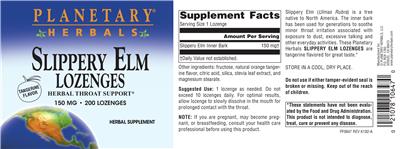
| Slippery Elm | 150 mg | † |
Other ingredients: Fructose, natural Orange Tangerine flavor, Citric Acid, Silica, Stevia leaf extract, Magnesium Stearate
% Daily Values for: Adults and children 4 or more years of age.
Where this label comes from
An original label of the NIH's Dietary Supplement Label Database, entered there on 26 February 2020, shown here as it was entered. The NIH's record
General information
- Product name
- Slippery Elm Lozenges Tangerine Flavor 150 mg
- Brand
- Planetary Herbals
- Barcode (UPC)
- 0 21078 10647 0
- Net contents
- 200 Lozenge(s)
- Market status
- Off market
- DSLD ID
- 213340
Classification
Label statements
FDA Statement of Identity: Herbal Supplement
Directions: Suggested Use: 1 lozenge as needed. Do not exceed 10 lozenges daily. For optimal results, allow lozenge to slowly dissolve in the mouth for prolonged contact with the throat.
Precautions: Pregnant or Nursing or Prescription Medications: Note: If you are pregnant, may become pregnant, or breastfeeding, consult your health care professional before using this product.
Formula: Contains: Slippery Elm (Ulmas Rubra) is a tree native to North America. The inner bark has been used for generations to soothe minor throat irritation associated with exposure to dust, excessive talking and other everyday activities. These Planetary Herbals Slippery Elm Lozenges are tangerine flavored for great taste.
Storage: Store in a cool, dry place.
Precautions: All Other: Do not use if either tamper-evident seal is broken or missing.
Precautions: Children: Keep out of the reach of children.
Brand information
Manufactured for: Planetary Herbals, LLC, Soquel, CA
More labels from Planetary Herbals
Labels only: each label is shown as printed on the bottle, with no grades, rankings or advice. A label in this database is not an endorsement of the product. Read the label on the bottle you buy: makers change their formulas. Reverse Age Lab is not affiliated with, or endorsed by, the National Institutes of Health or its Office of Dietary Supplements. The original labels come from the NIH’s public-domain data; the labels since are read by us. Search the Dietary Supplement Label Database.