
| Caffeine | 5 mg | † |
Other ingredients: Cinnamon, Dong Quai, Eucommia, Ginger, Ginseng, Green Tea, Kombucha, Lemon Grass, Licorice, Lycii Barbarum, Natural Plum Flavour, Passion fruit, Rehmannia, Reishi Mushroom, Spearmint, White Peony
% Daily Values for: Adults and children 4 or more years of age.
Where this label comes from
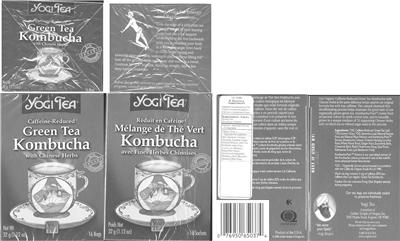
An original label of the NIH's Dietary Supplement Label Database, entered there on 25 June 2013, shown here as it was entered. The NIH's record
General information
- Product name
- Green Tea Kombucha With Chinese Herbs
- Brand
- Yogi
- Barcode (UPC)
- 0 76950 65037 4
- Net contents
- 32 Gram(s); 1.12 oz.; 16 Bag(s)
- Market status
- On market
- DSLD ID
- 21428
Classification
- Supplement form
- Other (e.g. tea bag)
- Product type
- Non-Nutrient/Non-Botanical
- Claim types on the label
- All Other
- Intended for
- Adult (18 - 50 Years), Kosher
Label statements
Formula: Contains: Ingredients: *OG Caffeine-Reduced Green Tea Leaf, *OG Lemon Grass, *OG Spearmint Leaf, Natural Passion Fruit and Natural Plum Flavours and Kombucha-Pure(TM) Extract (Kombucha Culture, Oriental Ginseng, Licorice Root, White Peony Root, Ginger Root, Eucommia Bark, Cinnamon Bark, Reishi Mushroom, Dong Quai Root, Rehmannia Root, Lycii Barbarum Fruit).
Formula: Contains: *Each tea bag contains 5 mg of caffeine, 82% less caffeine than our regular Green Tea Kombucha.
Precautions: Pregnant or Nursing or Prescription Medications: Caution: Do not consume Dong Quai (Angelica sinensis) during pregnancy.
Precautions: All Other: Before doing this exercise or participating in any exercise program, consult your physician.
FDA Statement of Identity: A Dietary Supplement
Brand information
A product of: Golden Temple of Oregon, Inc., Eugene, OR
More labels from Yogi
Labels only: each label is shown as printed on the bottle, with no grades, rankings or advice. A label in this database is not an endorsement of the product. Read the label on the bottle you buy: makers change their formulas. Reverse Age Lab is not affiliated with, or endorsed by, the National Institutes of Health or its Office of Dietary Supplements. The original labels come from the NIH’s public-domain data; the labels since are read by us. Search the Dietary Supplement Label Database.