
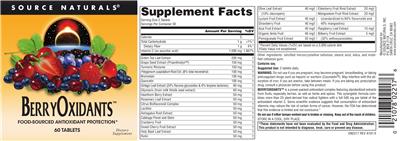
| Calories | 5 | |
| Total Carbohydrates | 1 g | <1% |
| Dietary Fiber | 1 g | 4% |
| Vitamin C (as Ascorbic Acid) | 1,000 mg | 1,667% |
| Green Tea leaf extract | 200 mg | † |
| Grape seed extract | 150 mg | † |
| Turmeric | 150 mg | † |
| Polygonum cuspidatum root ext. (as Total Resveratrol)Polygonum cuspidatum root ext. (Form: 8% total Resveratrol) PlantPart: root Genus: Polygonum Species: cuspidatum | 100 mg | † |
| Bromelain | 100 mg | † |
| Quercetin | 100 mg | † |
| Gingko leaf extract (as Flavone Glycosides, & Terpene Lactones)Gingko leaf extract (Form: 24% Flavone Glycosides, & 6% Terpene Lactones) PlantPart: leaf Genus: Ginkgo | 60 mg | † |
| Silymarin (as from Milk Thistle seed extract)Silymarin (Form: from Milk Thistle seed extract PlantPart: seed) | 60 mg | † |
| Hawthorn berry extract | 50 mg | † |
| Rosemary leaf extract | 50 mg | † |
| Citrus Bioflavonoid Complex | 50 mg | † |
| Lecithin | 50 mg | † |
| Astragalus Root Extract | 50 mg | † |
| Cabbage | 50 mg | † |
| Cranberry | 50 mg | † |
| Sweet Cherry Fruit Extract | 50 mg | † |
| Holy Basil Leaf Extract | 50 mg | † |
| Rutin | 50 mg | † |
| Olive leaf extract (as Oleuropein)Olive leaf extract (Form: 10% Oleuropein) PlantPart: leaf | 40 mg | † |
| Lycium fruit extract | 40 mg | † |
| Strawberry | 40 mg | † |
| Acai fruit extract | 40 mg | † |
| organic Amla | 40 mg | † |
| Pomegranate fruit extract | 20 mg | † |
| Elderberry fruit rind extract | 20 mg | † |
| Mangosteen fruit rind extract (as standardized to Flavonoids, and Mangostins)Mangosteen fruit rind extract (Form: standardized to 90% Flavonoids, and 40% Mangostins) PlantPart: fruit rind | 20 mg | † |
| Raspberry leaf extract | 10 mg | † |
| Bilberry fruit extract (as Anthocyanosides)Bilberry fruit extract (Form: 32% Anthocyanosides) PlantPart: fruit | 5 mg | † |
Other ingredients: silicified Microcrystalline Cellulose, Stearic Acid, Silica, modified Cellulose Gum
% Daily Values for: Adults and children 4 or more years of age.
Where this label comes from
An original label of the NIH's Dietary Supplement Label Database, entered there on 24 March 2020, shown here as it was entered. The NIH's record
General information
- Product name
- BerryOxidants
- Brand
- Source Naturals
- Barcode (UPC)
- 0 21078 02217 6
- Net contents
- 60 Tablet(s)
- Market status
- On market
- DSLD ID
- 214740
Classification
- Supplement form
- Tablet or Pill
- Product type
- Other Combinations
- Claim types on the label
- Nutrient, All Other, Qualified Health, Structure/Function
- Intended for
- Adult (18 - 50 Years), Women (not pregnant or lactating)
Label statements
FDA Statement of Identity: Dietary Supplement
Precautions: Allergies: Contains soy.
Directions: Suggested Use: 2 tablets daily.
Precautions: Pregnant or Nursing or Prescription Medications: Warning: Do not use if you are pregnant, may become pregnant, breastfeeding, or taking anticoagulant drugs such as heparin or warfarin (Coumadin). May interfere with the absorption of iron; if you are anemic, take between meals. If you are taking any prescription drug, consult a physician before using this product.
Formula: Contains: BerryOxidants is a power-packed antioxidant complex featuring standardized extracts from fruits, especially berries, as well as herbs and spices. This synergistic formula combines more than 25 plant-derived free radical fighters with a full 500 mg per tablet of the antioxidant vitamin C.
Precautions: All Other: Do not use if either tamper-evident seal is broken or missing.
Precautions: Children: Keep out of the reach of children.
Storage: Store in a cool, dry place.
Brand information
Manufactured for: Source Naturals, Inc., Santa Cruz, CA
More labels from Source Naturals
Labels only: each label is shown as printed on the bottle, with no grades, rankings or advice. A label in this database is not an endorsement of the product. Read the label on the bottle you buy: makers change their formulas. Reverse Age Lab is not affiliated with, or endorsed by, the National Institutes of Health or its Office of Dietary Supplements. The original labels come from the NIH’s public-domain data; the labels since are read by us. Search the Dietary Supplement Label Database.