
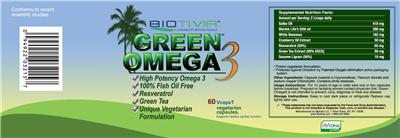
| Salba Oil | 418 mg | |
| Martek Life's DHA oil | 280 mg | |
| White Beeswax | 162 mg | |
| Cranberry Oil Extract | 50 mg | |
| ResveratrolResveratrol Note: 50% | 50 mg | |
| Green Tea Extract (as EGCG)Green Tea Extract (Form: 50% EGCG) | 50 mg | |
| Sesame LignanSesame Lignan Note: 50% | 10 mg |
Other ingredients: Capsule material
% Daily Values for: Adults and children 4 or more years of age.
Where this label comes from
An original label of the NIH's Dietary Supplement Label Database, entered there on 24 May 2013, shown here as it was entered. The NIH's record
General information
- Product name
- Green Omega3
- Brand
- Biotivia
- Barcode (UPC)
- 0 94922 03215 7
- Net contents
- 60 VcapsT
- Market status
- Off market
- DSLD ID
- 21478
Classification
- Supplement form
- Capsule
- Product type
- Other Combinations
- Claim types on the label
- Nutrient, All Other, Structure/Function
- Intended for
- Children 4 or More Years of Age, Vegetarian, Adult (18 - 50 Years)
Label statements
Formulation: Does NOT Contain: - 100% Fish Oil Free
Formula: Contains: - Resveratrol - Green Tea
Precautions: Allergies: Contains white beeswax.
Directions: Usage Instructions: For 12 years of age or older take one or two capsules before breakfast.
Precautions: Pregnant or Nursing or Prescription Medications: Pregnant or lactating women contact physician first.
Storage: Storage Instructions: Keep in cool dark place or refrigerate Replace cap tightly after use.
Brand information
Manufactured by: Biotivia LLC, NY, NY
More labels from Biotivia
Labels only: each label is shown as printed on the bottle, with no grades, rankings or advice. A label in this database is not an endorsement of the product. Read the label on the bottle you buy: makers change their formulas. Reverse Age Lab is not affiliated with, or endorsed by, the National Institutes of Health or its Office of Dietary Supplements. The original labels come from the NIH’s public-domain data; the labels since are read by us. Search the Dietary Supplement Label Database.