
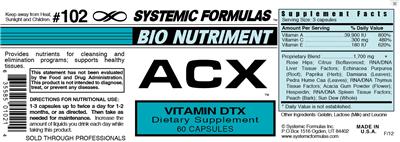
| Vitamin A | 39,900 IU | 800% |
| Vitamin C | 300 mg | 480% |
| Vitamin E | 180 IU | 620% |
| Proprietary Blend (as Acacia Gum powder, Citrus Bioflavonoid, Damiana, Echinacea purpurea, Hesperdin, Paprika, Peach, Pedra Hume Caa, RNA/DNA Liver Tissue Factors, RNA/DNA Spleen Tissue Factors, RNA/DNA Thymus Tissue Factors, Rose Hips, Sun Dew) | 1,700 mg | † |
Other ingredients: Gelatin, Lactose, Leucine
% Daily Values for: Adults and children 4 or more years of age.
Where this label comes from
An original label of the NIH's Dietary Supplement Label Database, entered there on 25 June 2013, shown here as it was entered. The NIH's record
General information
- Product name
- ACX Vitamin DTX
- Brand
- Systemic Formulas Bio Nutriment
- Barcode (UPC)
- 6 35585 01021 4
- Net contents
- 60 Capsule(s)
- Market status
- On market
- DSLD ID
- 22204
Classification
Label statements
Storage: Keep away from Heat, Sunlight and Children.
Precautions: Children: Keep away from Heat, Sunlight and Children.
Directions: DIRECTIONS FOR NUTRITIONAL USE: 1-3 capsules up to twice a day for 1-2 months, or as directed. Then take as needed for maintenance. Increase the amount of liquids you drink each day while taking this product.
FDA Statement of Identity: Dietary Supplement
Brand information
(c): Systemic Formulas Inc., Ogden, UT
More labels from Systemic Formulas Bio Nutriment
Labels only: each label is shown as printed on the bottle, with no grades, rankings or advice. A label in this database is not an endorsement of the product. Read the label on the bottle you buy: makers change their formulas. Reverse Age Lab is not affiliated with, or endorsed by, the National Institutes of Health or its Office of Dietary Supplements. The original labels come from the NIH’s public-domain data; the labels since are read by us. Search the Dietary Supplement Label Database.