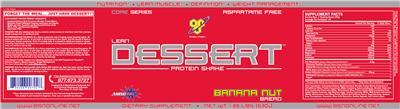
| Calories | 130 {Calories} | |
| Calories from Fat | 25 {Calories} | |
| Total Fat | 3 g | 5% |
| Saturated Fat | 2 g | 10% |
| Cholesterol | 52 mg | 17% |
| Total Carbohydrates | 7 g | 2% |
| Dietary FiberDietary Fiber Note: soluble | 1 g | 4% |
| Sugar | 3 g | |
| Protein | 20 g | 40% |
| Calcium | 320 mg | 32% |
| Phosphorus | 200 mg | 20% |
| Magnesium | 40 mg | 10% |
| Sodium | 100 mg | 4% |
| Potassium | 125 mg | 4% |
| ELG Stimulators | 2.8 g | † |
| Glutamine PeptidesGlutamine Peptides Note: Stimulates Muscle Growth and Recovery | † | |
| Canola OilCanola Oil Note: A source of Omega Fatty Acids - AKA "good fats or leaning fats" | † | |
| MCTsMCTs (Alt. Name: Medium Chain Triglycerides) Note: As a source of energy | † | |
| Protein Utilization EnzymesProtein Utilization Enzymes Note: Promotes optimum protein digestion and absorption | 70 mg | † |
| AminogenAminogen Note: Aminogen is a registered trademark of Triarco Industries, Inc. | † | |
| Papain | † |
Other ingredients: A Sustained Release Multi-Functional Micellar Protein Matrix, Maltodextrin, Corn Syrup, Solids, Natural and Artificial flavors, Vegetable Gum, Xanthan Gum, Carrageenan, Sucralose, Mono & Di Glycerides, Sodium Alginate, Lecithin
% Daily Values for: Adults and children 4 or more years of age.
Where this label comes from
An original label of the NIH's Dietary Supplement Label Database, entered there on 25 November 2011, shown here as it was entered. The NIH's record
General information
- Product name
- Lean Dessert Banana Nut Bread
- Brand
- BSN
- Barcode (UPC)
- 8 34266 00702 8
- Net contents
- 1.39 lb; 630 Gram(s)
- Market status
- On market
- DSLD ID
- 2303
Classification
- Supplement form
- Powder
- Product type
- Other Combinations
- Claim types on the label
- All Other, Structure/Function
- Intended for
- Adult (18 - 50 Years)
Label statements
FDA Statement of Identity: DIETARY SUPPLEMENT
Directions: RECOMMENDED USE FOR FEMALES: As a dietary supplement, take 1 heaping scoop (equaling approx. 20 grams of protein) with 4-5 oz. of cold water or any beverage of your choice. Vary the amount of liquid to achieve your desired consistency. Drink 2-4 servings daily or as needed to satisfy your protein or body shaping requirements. To increase your protein intake per serving and to achieve an amazing milk shake taste, use non-fat or low fat milk or your favorite soy beverage.
Directions: RECOMMENDED USE FOR MALES: As a dietary supplement, take 2 heaping scoops (equaling approx. 40 grams of protein) with 8-10 oz. of cold water or any beverage of your choice. Vary the amount of liquid to achieve your desired consistency. Drink 2-4 servings daily, or as needed to satisfy your protein or muscle enhancing requirements. To increase your protein intake per serving and to achieve an amazing milk shake taste, use non-fat or low fat milk.
Precautions: Pregnant or Nursing or Prescription Medications: Not for use by infants, children, or pregnant or nursing women.
Precautions: Allergies: Allergen Warning: Manufactured on equipment which processes products containing milk, egg, soybeans, shellfish, fish oil, tree nuts, and peanut flavor.
Formulation: Does NOT Contain: ASPARTAME FREE
Precautions: All Other: Do not use for weight reduction in such diets without medical supervision.
Precautions: All Other: WARNING: Very low calorie protein diets (below 400 calories per day) may cause serious illness or death.
Brand information
Developed by & manufactured exclusively for:: Bio-Engineered Supplements & Nutrition, Inc., Boca Raton, FL, USA
More labels from BSN
Labels only: each label is shown as printed on the bottle, with no grades, rankings or advice. A label in this database is not an endorsement of the product. Read the label on the bottle you buy: makers change their formulas. Reverse Age Lab is not affiliated with, or endorsed by, the National Institutes of Health or its Office of Dietary Supplements. The original labels come from the NIH’s public-domain data; the labels since are read by us. Search the Dietary Supplement Label Database.