
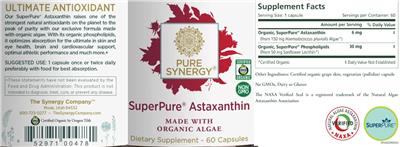
| organic, SuperPure Astaxanthin | 6 mg | † |
| certified organic Haematococcus pluvialis Algae | 150 mg | |
| organic, SuperPure Phospholipids | 30 mg | † |
| certified organic Sunflower lecithin | 50 mg |
Other ingredients: certified organic Grape, Vegetarian Capsule
% Daily Values for: Adults and children 4 or more years of age.
Where this label comes from
An original label of the NIH's Dietary Supplement Label Database, entered there on 22 April 2021, shown here as it was entered. The NIH's record
General information
- Product name
- SuperPure Astaxanthin
- Brand
- Pure Synergy
- Barcode (UPC)
- 8 52971 00478 1
- Net contents
- 60 Capsule(s)
- Market status
- On market
- DSLD ID
- 246681
Classification
- Supplement form
- Capsule
- Product type
- Other Combinations
- Claim types on the label
- All Other, Structure/Function
- Intended for
- Adult (18 - 50 Years), Organic, Gluten Free, Dairy Free
Label statements
Formula: Contains: Our SuperPure Astaxanthin raises one of the strongest natural antioxidants on the planet to the peak of purity with our exclusive formula made with organic algae. With its organic phospholipids, it optimizes absorption for the ultimate in skin and eye health, brain and cardiovascular support optimal athletic performance and much more.
Directions: Suggested Use: 1 capsule once or twice daily preferably with food for best absoprtion.
Formulation: Does NOT Contain: Non GMO
Formula: Contains: Made with organic algae
FDA Statement of Identity: Dietary Supplement
Formulation: Does NOT Contain: No GMO's, dairy or gluten
Formula: Contains: Verified Natural Algae Astaxanthin NAXA
Formula: Contains: SuperPure
Brand information
Manufacturer: The Synergy Company, Moab, Utah
More labels from Pure Synergy
Labels only: each label is shown as printed on the bottle, with no grades, rankings or advice. A label in this database is not an endorsement of the product. Read the label on the bottle you buy: makers change their formulas. Reverse Age Lab is not affiliated with, or endorsed by, the National Institutes of Health or its Office of Dietary Supplements. The original labels come from the NIH’s public-domain data; the labels since are read by us. Search the Dietary Supplement Label Database.