
| Calories | 120 | |
| Total Fat | 3 g | 3% |
| Saturated Fat | 1 g | 6% |
| Total Carbohydrates | 5 g | 2% |
| Dietary Fiber | 4 g | 13% |
| Protein | 20 g | 40% |
| Calcium | 68 mg | 6% |
| Iron | 6 mg | 30% |
| Sodium | 250 mg | 10% |
| Potassium | 150 mg | 4% |
| Vegan Plant ProteinVegan Plant Protein Note: typical protein ratio | 25.6 g | † |
| whole yellow Pea Proteinwhole yellow Pea Protein Note: yielding | 17.5 g | |
| complete Protein | 14 g | |
| whole Brown Rice Proteinwhole Brown Rice Protein Note: yielding | 7.69 g | |
| complete Protein | 6 g | |
| Frutalose (as Chicory Root Extract) | 1.8 g | † |
Other ingredients: Alkalized Cocoa powder, unsweetened toasted Coconut, Natural Flavor, Salt, Xanthan Gum, Monk Fruit extract, Stevia leaf extract
% Daily Values for: Adults and children 4 or more years of age.
Where this label comes from
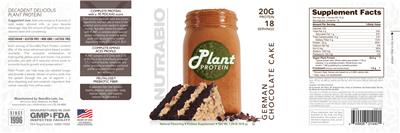
An original label of the NIH's Dietary Supplement Label Database, entered there on 27 July 2021, shown here as it was entered. The NIH's record
General information
- Product name
- Plant Protein German Chocolate Cake
- Brand
- NutraBio
- Barcode (UPC)
- 6 49908 21440 1
- Net contents
- 1.28 Pound(s); 579 Gram(s)
- Market status
- On market
- DSLD ID
- 248373
Classification
- Supplement form
- Powder
- Product type
- Botanical with Nutrients
- Claim types on the label
- Nutrient, All Other, Structure/Function
- Intended for
- Vegetarian, Adult (18 - 50 Years), Kosher, Gluten Free
Label statements
Formula: Contains: Decadent Delicious Plant Protein!
Directions: Suggested Use: Add one scoop to 8 ounces of cold water, almond milk, or your favorite beverage. Vary the amount of liquid to meet your desired taste and consistency.
Formulation: Does NOT Contain: Gluten Free Non-GMO Lactose Free
Formula: Contains: Each serving of NutraBio Plant Protein contains 20g of the most advanced plant-based protein available. This exclusive combination of high-quality yellow peas and brown rice protein provides you with all 9 essential amino acids to promote muscle growth and preservation.
Formula: Contains: Complete protein with a .95 PDCAAS score Plant proteins generally have low protein digestibility and lack one or more of the essential amino acids needed to support muscle. NutraBio solved this problem with Plant, a complete plant-sourced protein containing all essential amino acids with an exceptional protein digestibility score (PDCAAS) of .95 Complete Amino Acid Profile Plant contains all 9 EAAs with 3.7g of BCAAs in the scientifically preferred 2:1:1 ratio of leucine, isoleucine, and valine, providing an excellent nutritional profile to support muscle growth and recovery. Frutalose Prebiotic Fiber A patented fiber that delivers healthy prebiotic dietary fiber, helps improve satiety, and supports reduced fat absorption.
Formula: Contains: 20 g Protein Natural Flavoring
FDA Statement of Identity: Protein Supplement
Precautions: Allergies: Contains: Tree Nuts (Coconut)
Formulation: Does NOT Contain: No excipients, no fillers, no artificial color, flavor or sweetener, no preservatives, no soy, no wheat, no yeast, no fish, no milk.
Precautions: All Other: This product is intended as a dietary supplement only. Do not use as a sole source of nutrition.
Storage: Store in a cool, dry place.
Precautions: All Other: CA Prop 65 Warning: This product may expose you to chemicals including lead known to the State of California to cause birth defects or other reproductive harm. For more information, go to www.P65Warnings.ca.gov.
Brand information
Manufactured by: NutraBio Labs, Inc., Middlesex, NJ
More labels from NutraBio
Labels only: each label is shown as printed on the bottle, with no grades, rankings or advice. A label in this database is not an endorsement of the product. Read the label on the bottle you buy: makers change their formulas. Reverse Age Lab is not affiliated with, or endorsed by, the National Institutes of Health or its Office of Dietary Supplements. The original labels come from the NIH’s public-domain data; the labels since are read by us. Search the Dietary Supplement Label Database.