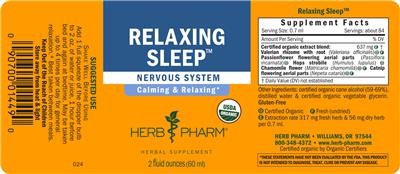
| Certified Organic Extract BlendCertified Organic Extract Blend Note: Extraction rate 317 mg fresh herb & 56 mg dry herb per 0.7 ml. | 637 mg | † |
| Valerian extractValerian extract PlantPart: rhizome with root Genus: Valeriana Species: officinalis Note: (certified organic) (fresh (undried)) | ||
| Passionflower extract | ||
| Hops extractHops extract PlantPart: strobile Genus: Humulus Species: lupulus Note: certified organic | ||
| Chamomile extractChamomile extract PlantPart: flower Genus: Matricaria Species: chamomilla Note: (certified organic) (fresh (undried)) | ||
| Catnip extract |
Other ingredients: certified organic Cane Alcohol, distilled Water, certified organic Vegetable Glycerin
% Daily Values for: Adults and children 4 or more years of age.
Where this label comes from
An original label of the NIH's Dietary Supplement Label Database, entered there on 22 October 2021, shown here as it was entered. The NIH's record
General information
- Product name
- Relaxing Sleep
- Brand
- Herb Pharm
- Barcode (UPC)
- 0 90700 01449 0
- Net contents
- 2 Fluid Ounce(s); 60 mL
- Market status
- Off market
- DSLD ID
- 256448
Classification
Label statements
Directions: Suggested use Shake well before using Add 1 full squeeze of the dropper bulb to 2 oz. of water or juice, 1 hour before bed and again at bedtime. May be taken up to 4 times per day for general relaxation. Best taken between meals.
Precautions: Children: Keep out of the reach of children
Storage: Store away from heat & light
FDA Statement of Identity: Herbal Supplement
Formulation: Does NOT Contain: Gluten-free
Brand information
Manufacturer: Herb Pharm, Williams, OR
More labels from Herb Pharm
Labels only: each label is shown as printed on the bottle, with no grades, rankings or advice. A label in this database is not an endorsement of the product. Read the label on the bottle you buy: makers change their formulas. Reverse Age Lab is not affiliated with, or endorsed by, the National Institutes of Health or its Office of Dietary Supplements. The original labels come from the NIH’s public-domain data; the labels since are read by us. Search the Dietary Supplement Label Database.