
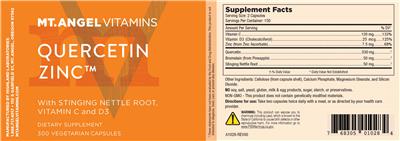
| Vitamin C | 120 mg | 133% |
| Vitamin D3 (as Cholecalciferol) | 25 mcg | 125% |
| Zinc (as Zinc Ascorbate) | 7.5 mg | 68% |
| Quercetin | 530 mg | † |
| Bromelain (as Pineapple) | 50 mg | † |
| Stinging Nettle | 50 mg | † |
Other ingredients: Cellulose, Calcium Phosphate, Magnesium Stearate, Silicon Dioxide
% Daily Values for: Adults and children 4 or more years of age.
Where this label comes from
An original label of the NIH's Dietary Supplement Label Database, entered there on 22 January 2022, shown here as it was entered. The NIH's record
General information
- Product name
- Quercetin Zinc
- Brand
- Mt. Angel Vitamins
- Barcode (UPC)
- 7 68305 01028 4
- Net contents
- 300 Vegetable Capsule(s)
- Market status
- On market
- DSLD ID
- 258359
Classification
- Supplement form
- Capsule
- Product type
- Other Combinations
- Claim types on the label
- Nutrient, All Other, Structure/Function
- Intended for
- Adult (18 - 50 Years), Gluten Free, Dairy Free, Sugar Free
Label statements
Formula: Contains: With Stinging Nettle Root, Vitamin C and D3
FDA Statement of Identity: Dietary Supplement
Formulation: Does NOT Contain: No soy, salt, yeast, gluten, milk & egg products, sugar, starch, or preservatives.
Directions: Directions for use: Take two capsules twice daily with a meal, or as directed by your health care provider.
Precautions: All Other: Warning: This product can expose you to chemicals including lead, which is known to the State of California to cause birth defects or other reproductive harm. For more information go to www.P65Warnings.ca.gov.
Brand information
Manufactured By: Highland Laboratories, Mt Angel, Oregon
More labels from Mt. Angel Vitamins
Labels only: each label is shown as printed on the bottle, with no grades, rankings or advice. A label in this database is not an endorsement of the product. Read the label on the bottle you buy: makers change their formulas. Reverse Age Lab is not affiliated with, or endorsed by, the National Institutes of Health or its Office of Dietary Supplements. The original labels come from the NIH’s public-domain data; the labels since are read by us. Search the Dietary Supplement Label Database.