
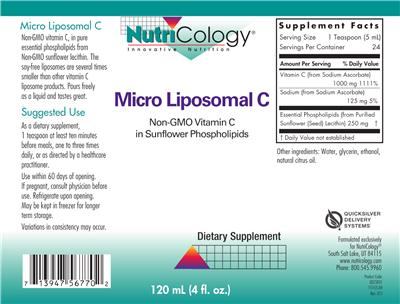
| Vitamin C (as Sodium Ascorbate) | 1,000 mg | 1,111% |
| Sodium (as Sodium Ascorbate) | 125 mg | 5% |
| Essential Phospholipids (as from purified Sunflower (seed) Lecithin) | 250 mg | † |
Other ingredients: Water, Glycerin, Ethanol, Natural Citrus Oil
% Daily Values for: Adults and children 4 or more years of age.
Where this label comes from
An original label of the NIH's Dietary Supplement Label Database, entered there on 18 December 2021, shown here as it was entered. The NIH's record
General information
- Product name
- Micro Liposomal C
- Brand
- NutriCology
- Barcode (UPC)
- 7 13947 56770 2
- Net contents
- 120 mL; 4 fl. Oz.
- Market status
- On market
- DSLD ID
- 258642
Classification
- Supplement form
- Liquid
- Product type
- Other Combinations
- Claim types on the label
- Nutrient, All Other
- Intended for
- Adult (18 - 50 Years)
Label statements
Formula: Contains: Non-GMO vitamin C, in pure essential phospholipids from Non-GMO sunflower lecithin. The soy-free liposomes are several times smaller than other vitamin C liposome products. Pours freely as a liquid and tastes great.
Directions: Suggested Use As a dietary supplement, 1 teaspoon at least ten minutes before meals, one to three times daily, or as directed by a healthcare practitioner. Use within 60 days of opening.
Precautions: Pregnant or Nursing or Prescription Medications: If pregnant, consult physician before use.
Storage: Refrigerate upon opening. May be kept in freezer for longer term storage.
Formula: Contains: Non-GMO Vitamin C in Sunflower Phospholipids
FDA Statement of Identity: Dietary Supplement
Brand information
Formulated exclusively for: NutriCology, South Salt Lake, UT
More labels from NutriCology
Labels only: each label is shown as printed on the bottle, with no grades, rankings or advice. A label in this database is not an endorsement of the product. Read the label on the bottle you buy: makers change their formulas. Reverse Age Lab is not affiliated with, or endorsed by, the National Institutes of Health or its Office of Dietary Supplements. The original labels come from the NIH’s public-domain data; the labels since are read by us. Search the Dietary Supplement Label Database.