
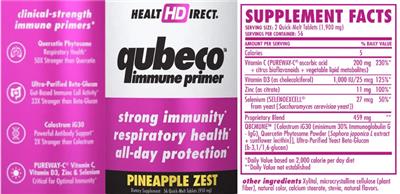
| Calories | 5 | |
| Vitamin C (as Citrus Bioflavonoids, Lipid Metabolites, Pureway-C) | 200 mg | 230% |
| Vitamin D3 (as Cholecalciferol)1000 IU | 25 mcg | 125% |
| Zinc (as Zinc Citrate) | 11 mg | 100% |
| Selenium (as SelenoExcell) | 27 mcg | 50% |
| Proprietary Blend | 459 mg | † |
| QBCMUNE (as Colostrum iG30, Quercetin Phytosome, Powder) | ||
| Yeast Beta-Glucan (as Beta-1,3-Glucan, Beta-1,6-Glucan)Ultra-purified |
Other ingredients: Xylitol, Microcrystalline Cellulose, Natural color, Calcium Stearate, Stevia, Natural Flavors
% Daily Values for: Adults and children 4 or more years of age.
Where this label comes from
An original label of the NIH's Dietary Supplement Label Database, entered there on 21 July 2022, shown here as it was entered. The NIH's record · picture of the label (PDF)
General information
- Product name
- Qubeco Immune Primer Pineapple Zest
- Brand
- Health Direct
- Barcode (UPC)
- Not printed
- Net contents
- 56 Quick Melt Tablet(s)
- Market status
- Off market
- DSLD ID
- 268547
Classification
- Supplement form
- Tablet or Pill
- Product type
- Other Combinations
- Claim types on the label
- Nutrient, All Other, Structure/Function
- Intended for
- Adult (18 - 50 Years)
Label statements
Formula: Contains: Quercetin Phytosome Respiratory health 50x stronger than Quercetin Ultra-Purified Beta-Glucan Gut-based immune cell activity 33x stronger than Beta-Glucan Colostrum iG30 Powerful antibody support 2X stronger than Colostrum Pureway-C Vitamin C, Vitamin D3, Zinc & Selenium Critical for optimal immunity
FDA Statement of Identity: Dietary Supplement
Brand information
Manufacturer: HD Nutrition Inc.
More labels from Health Direct
Labels only: each label is shown as printed on the bottle, with no grades, rankings or advice. A label in this database is not an endorsement of the product. Read the label on the bottle you buy: makers change their formulas. Reverse Age Lab is not affiliated with, or endorsed by, the National Institutes of Health or its Office of Dietary Supplements. The original labels come from the NIH’s public-domain data; the labels since are read by us. Search the Dietary Supplement Label Database.