
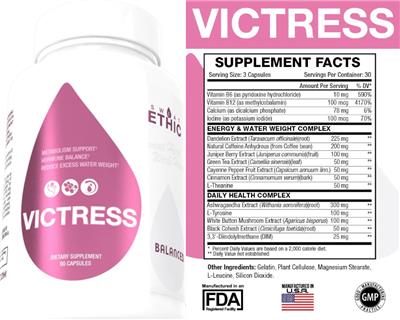
| Vitamin B6 (as Pyridoxine Hydrochloride) | 10 mg | 590% |
| Vitamin B12 (as Methylcobalamin) | 100 mcg | 4,170% |
| Calcium (as Dicalcium Phosphate) | 78 mg | 6% |
| Iodine (as Potassium Iodine) | 100 mcg | 70% |
| Energy & Water Weight Complex | ||
| Dandelion extract | 225 mg | † |
| natural Caffeine Anhydrous (as from Coffee) | 200 mg | † |
| Juniper Berry Extract (as Juniperus communis Berry Extract)fruit | 100 mg | † |
| Green Tea extract | 50 mg | † |
| Cayenne Pepper fruit extract | 50 mg | † |
| Cinnamon Extract | 50 mg | † |
| L-Theanine | 50 mg | † |
| Daily Health Complex | ||
| Ashwagandha extract | 300 mg | † |
| L-Tyrosine | 100 mg | † |
| White Button Mushroom extract | 100 mg | † |
| Black Cohosh Root Extract | 50 mg | † |
| 3,3'-Diindolylmethane | 25 mg | † |
Other ingredients: Gelatin, Plant Cellulose, Magnesium Stearate, L-Leucine, Silicon Dioxide
% Daily Values for: Adults and children 4 or more years of age.
Where this label comes from
An original label of the NIH's Dietary Supplement Label Database, entered there on 16 June 2022, shown here as it was entered. The NIH's record · picture of the label (PDF)
General information
- Product name
- Victress
- Brand
- Sweat Ethic
- Barcode (UPC)
- Not printed
- Net contents
- 90 Capsule(s)
- Market status
- On market
- DSLD ID
- 269078
Classification
- Supplement form
- Capsule
- Product type
- Other Combinations
- Claim types on the label
- All Other, Structure/Function
- Intended for
- Adult (18 - 50 Years)
Brand information
Manufacturer: Sweat Ethic
More labels from Sweat Ethic
Labels only: each label is shown as printed on the bottle, with no grades, rankings or advice. A label in this database is not an endorsement of the product. Read the label on the bottle you buy: makers change their formulas. Reverse Age Lab is not affiliated with, or endorsed by, the National Institutes of Health or its Office of Dietary Supplements. The original labels come from the NIH’s public-domain data; the labels since are read by us. Search the Dietary Supplement Label Database.