
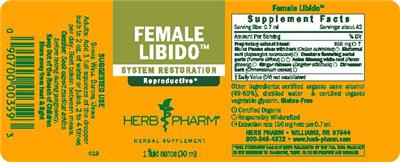
| Proprietary Extract BlendExtraction rate 156 mg herb per 0.7 mL. | 655 mg | † |
| Muira Puama Stem with Bark ExtractMuira Puama extract PlantPart: stem with bark Genus: Croton Species: echioides Note: responsibly wildcrafted | ||
| Shatavari extractShatavari extract PlantPart: root Genus: Asparagus Species: racemosus Note: certified organic | ||
| Damiana Flowering Aerial Parts Extract (as Turnera diffusa Flowering Aerial Parts Extract)Certified Organic, responsibly wildcrafted | ||
| Asian Ginseng extractCertified Organic | ||
| Ginger rhizome extractcertified organic | ||
| Cinnamon bark extractCertified Organic |
Other ingredients: certified organic Cane Alcohol, distilled Water, certified organic Vegetable Glycerin
% Daily Values for: Adults and children 4 or more years of age.
Where this label comes from
An original label of the NIH's Dietary Supplement Label Database, entered there on 23 January 2023, shown here as it was entered. The NIH's record · picture of the label (PDF)
General information
- Product name
- Female Libido
- Brand
- Herb Pharm
- Barcode (UPC)
- 0 90700 00359 3
- Net contents
- 1 fl. Oz.; 30 mL
- Market status
- Off market
- DSLD ID
- 273754
Classification
Label statements
Directions: Suggested use Shake well before using Adults: Add 1 full squeeze of the dropper bulb to 2 oz. of water or juice, 2 to 4 times per day. Best taken between meals.
Precautions: Pregnant or Nursing or Prescription Medications: Caution: Seek expert medical advice before taking during pregnancy.
Precautions: Children: Keep out of the reach of children
Storage: Store away from heat & light
FDA Statement of Identity: Herbal Supplement
Formulation: Does NOT Contain: Gluten-free
Brand information
Manufacturer: Herb Pharm, Williams, OR
More labels from Herb Pharm
Labels only: each label is shown as printed on the bottle, with no grades, rankings or advice. A label in this database is not an endorsement of the product. Read the label on the bottle you buy: makers change their formulas. Reverse Age Lab is not affiliated with, or endorsed by, the National Institutes of Health or its Office of Dietary Supplements. The original labels come from the NIH’s public-domain data; the labels since are read by us. Search the Dietary Supplement Label Database.