
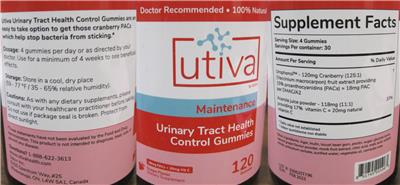
| Urophenol (as Cranberry Fruit Extract)cranberry (125:1) extract providing 15% proanthocyanidins (PACs) = 18 mg PAC per DMAC/A2 | 120 mg | † |
| Acerola, Powder (as Vitamin C, Natural)(11:1) providing 17% vitamin C = 20 mg natural vitamin C | 118 mg | 33% |
Other ingredients: Agar, Inulin, Locust Bean Gum, Pectin, Sugar, Glucose Syrup, Grape Flavor, Natural, Powder, Monk Fruit Extract, Citric Acid, Malic Acid, Sodium Citrate, Potassium Sorbate, Water, Purified, Vegetable Oil, Carnauba Wax
% Daily Values for: Adults and children 4 or more years of age.
Where this label comes from
An original label of the NIH's Dietary Supplement Label Database, entered there on 23 January 2023, shown here as it was entered. The NIH's record · picture of the label (PDF)
General information
- Product name
- Utiva Maintenance Grape Flavor
- Brand
- SZIO+
- Barcode (UPC)
- 8 51745 00106 3
- Net contents
- 120 Gummy(ies)
- Market status
- On market
- DSLD ID
- 273911
Classification
- Supplement form
- Gummy or Jelly
- Product type
- Botanical
- Claim types on the label
- Nutrient, All Other, Structure/Function
- Intended for
- Adult (18 - 50 Years)
Label statements
Directions: Dosage: 4 gummies per day or as directed by your doctor. Use for a minimum of 4 weeks to see beneficial effects.
Storage: Storage: Store in a cool, dry place (59 - 77 degrees F/35 - 65% relative humidity).
Precautions: All Other: Cautions: As with any dietary supplements, please consult with your healthcare practitioner before taking. Do not use if package seal is broken.
Storage: Protect from direct sunlight.
Formula: Contains: 18 mg PACs + 20 mg vit C
FDA Statement of Identity: Dietary Supplement
Brand information
Manufacturer: Szio+ Inc., Mississauga, ON, Canada
More labels from SZIO+
Labels only: each label is shown as printed on the bottle, with no grades, rankings or advice. A label in this database is not an endorsement of the product. Read the label on the bottle you buy: makers change their formulas. Reverse Age Lab is not affiliated with, or endorsed by, the National Institutes of Health or its Office of Dietary Supplements. The original labels come from the NIH’s public-domain data; the labels since are read by us. Search the Dietary Supplement Label Database.