
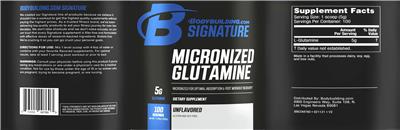
| L-Glutamine | 5 g | † |
% Daily Values for: Adults and children 4 or more years of age.
Where this label comes from
An original label of the NIH's Dietary Supplement Label Database, entered there on 21 February 2023, shown here as it was entered. The NIH's record · picture of the label (PDF)
General information
- Product name
- Micronized Glutamine
- Brand
- Bodybuilding.com Signature
- Barcode (UPC)
- 8 53002 00760 3
- Net contents
- 17.64 Ounce(s); 500 Gram(s)
- Market status
- On market
- DSLD ID
- 282411
Classification
- Supplement form
- Powder
- Product type
- Amino acid/Protein
- Claim types on the label
- Nutrient, All Other, Structure/Function
- Intended for
- Adult (18 - 50 Years), Women (not pregnant or lactating), Gluten Free
Label statements
Directions: Directions for Use: Mix 1 level scoop with 4 - 6 oz. of water or combine with your favorite flavored supplements. For optimal results, take at least 1 serving post workout or prior to bed.
Precautions: Pregnant or Nursing or Prescription Medications: Warnings: Consult your physician before using this product if you're taking any medications or are under a physician's care for a medical condition. Not for use by those under the age of 18 or by women that are pregnant, trying to get pregnant or nursing.
Precautions: Children: Not for use by those under the age of 18 or by women that are pregnant, trying to get pregnant or nursing.
Formula: Contains: 5 g glutamine
FDA Statement of Identity: Dietary Supplement
Formulation: Does NOT Contain: Gluten and soy free
Precautions: Allergies: Made in a facility that processes dairy, soy, egg, and tree nuts.
Brand information
Distributed by: Bodybuilding.com, Las Vegas, Nevada
More labels from Bodybuilding.com Signature
Labels only: each label is shown as printed on the bottle, with no grades, rankings or advice. A label in this database is not an endorsement of the product. Read the label on the bottle you buy: makers change their formulas. Reverse Age Lab is not affiliated with, or endorsed by, the National Institutes of Health or its Office of Dietary Supplements. The original labels come from the NIH’s public-domain data; the labels since are read by us. Search the Dietary Supplement Label Database.