
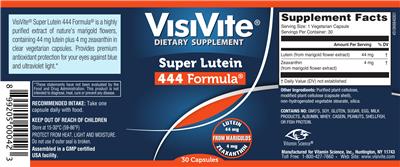
| Lutein (as Marigold Flower Extract) | 44 mg | † |
| Zeaxanthin (as Marigold Flower Extract) | 4 mg | † |
Other ingredients: Cellulose, Purified, Modified Cellulose, Stearate, Non-Hydrogenated, Silica
% Daily Values for: Adults and children 4 or more years of age.
Where this label comes from
An original label of the NIH's Dietary Supplement Label Database, entered there on 24 May 2023, shown here as it was entered. The NIH's record · picture of the label (PDF)
General information
- Product name
- Super Lutein 444 Formula
- Brand
- VisiVite
- Barcode (UPC)
- 8 99205 00042 3
- Net contents
- 30 Capsule(s)
- Market status
- On market
- DSLD ID
- 292319
Classification
- Supplement form
- Capsule
- Product type
- Non-Nutrient/Non-Botanical
- Claim types on the label
- All Other, Structure/Function
- Intended for
- Adult (18 - 50 Years), Gluten Free, Dairy Free, Sugar Free
Label statements
Formula: Contains: VisiVite Super Lutein 444 Formula is a highly purified extract of nature's marigold flowers, containing 44 mg lutein plus 4 mg zeaxanthin in clear vegetarian capsules. Provides premium antioxidant protection for your eyes against blue and ultraviolet light.
Directions: Recommended Intake: Take one capsule daily with food.
Storage: Store at 15-30 degrees C (59-86 degrees F)
Precautions: All Other: Protect from heat, light and moisture. Do not use if outer seal is broken.
Formula: Contains: Lutein 44 mg From Marigolds 4 mg Zeaxanthin
Formulation: Does NOT Contain: Contains No: GMO's, Soy, Gluten, Sugar, Egg, Milk Products, Albumin, Whey, Casein, Peanuts, Shellfish, or Fish Protein.
Brand information
Manufactured for: Vitamin Science, Inc., Huntington, NY
More labels from VisiVite
Labels only: each label is shown as printed on the bottle, with no grades, rankings or advice. A label in this database is not an endorsement of the product. Read the label on the bottle you buy: makers change their formulas. Reverse Age Lab is not affiliated with, or endorsed by, the National Institutes of Health or its Office of Dietary Supplements. The original labels come from the NIH’s public-domain data; the labels since are read by us. Search the Dietary Supplement Label Database.