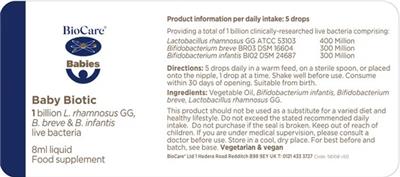
| Lactobacillus rhamnosus GG ATCC-53103400 Million CFU | ||
| Bifidobacterium breve BR03 DSM 16604300 Million CFU | ||
| Bifidobacterium infantis BI02 DSM 24687300 Million CFU |
Other ingredients: Vegetable Oil, Bifidobacterium infantis, Bifidobacterium breve, Lactobacillus rhamnosus GG
% Daily Values for: Infants.
Where this label comes from
An original label of the NIH's Dietary Supplement Label Database, entered there on 24 January 2024, shown here as it was entered. The NIH's record · picture of the label (PDF)
General information
- Product name
- Baby Biotic
- Brand
- BioCare
- Barcode (UPC)
- Not printed
- Net contents
- 8 mL
- Market status
- On market
- DSLD ID
- 302185
Classification
- Supplement form
- Liquid
- Product type
- Other Combinations
- Claim types on the label
- All Other
- Intended for
- Vegan, Vegetarian, Infants/Baby (0 - 1 Year), Dairy Free
Label statements
Formula: Contains: 1 billion L. rhamnosus GG, B. breve & B. infantis live bacteria
FDA Statement of Identity: Food Supplement
Directions: Directions: 5 drops daily in a warm feed, on a sterile spoon, or placed onto the nipple, 1 drop at a time. Shake well before use. Consume within 30 days of opening.
Precautions: All Other: This product should not be used as a substitute for a varied diet and healthy lifestyle. Do not exceed the stated recommended daily intake. Do not purchase if the seal is broken. If you are under medical supervision, please consult a doctor before use.
Precautions: Children: Keep out of reach of children.
Storage: Store in a cool, dry place.
Brand information
Manufacturer: BioCare Ltd., Redditch, United Kingdom
More labels from BioCare
Labels only: each label is shown as printed on the bottle, with no grades, rankings or advice. A label in this database is not an endorsement of the product. Read the label on the bottle you buy: makers change their formulas. Reverse Age Lab is not affiliated with, or endorsed by, the National Institutes of Health or its Office of Dietary Supplements. The original labels come from the NIH’s public-domain data; the labels since are read by us. Search the Dietary Supplement Label Database.