
GI Broom Fine Powdered Blend
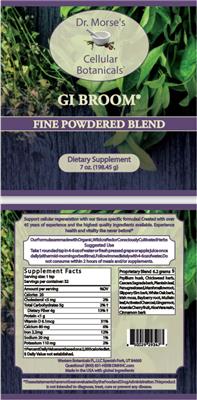
| Calories | 20 | |
| Cholesterol | <5 mg | 2% |
| Total Carbohydrates | 5 g | 2% |
| Dietary Fiber | 4 g | 13% |
| Protein | <1 g | |
| Vitamin D | 6.1 mcg | 31% |
| Calcium | 80 mg | 6% |
| Iron | 2.2 mg | 12% |
| Sodium | 20 mg | 1% |
| Potassium | 110 mg | 2% |
| Proprietary Blend | 6.2 g | † |
| Psyllium Husk | ||
| Chickweed | ||
| Cascara Sagrada | ||
| Plantain | ||
| Fenugreek | ||
| Marshmallow | ||
| Slippery Elm | ||
| White Oak | ||
| Irish Moss | ||
| Bayberry | ||
| Mullein | ||
| Charcoal, Activated | ||
| Ginger | ||
| Acerola Cherry | ||
| Aloe vera | ||
| Cinnamon |
% Daily Values for: Adults and children 4 or more years of age.
Where this label comes from
An original label of the NIH's Dietary Supplement Label Database, entered there on 22 November 2023, shown here as it was entered. The NIH's record · picture of the label (PDF)
General information
- Product name
- GI Broom Fine Powdered Blend
- Brand
- Dr. Morse's Cellular Botanicals
- Barcode (UPC)
- Not printed
- Net contents
- 7 Ounce(s); 198.45 Gram(s)
- Market status
- On market
- DSLD ID
- 302929
Classification
- Supplement form
- Powder
- Product type
- Other Combinations
- Claim types on the label
- All Other, Structure/Function
- Intended for
- Adult (18 - 50 Years)
Label statements
FDA Statement of Identity: Dietary Supplement
Directions: Suggested Use Take 1 rounded tsp in 4-6 oz of water or fresh pressed grape or apple juice once daily (either mid-morning or bedtime). Follow Immediately with4-6oz of water. Do not consume within 2 hours of meals and/or supplements.
Brand information
Manufacturer: Western Botanicals FL, LLC, Spanish Fork, UT
More labels from Dr. Morse's Cellular Botanicals
Labels only: each label is shown as printed on the bottle, with no grades, rankings or advice. A label in this database is not an endorsement of the product. Read the label on the bottle you buy: makers change their formulas. Reverse Age Lab is not affiliated with, or endorsed by, the National Institutes of Health or its Office of Dietary Supplements. The original labels come from the NIH’s public-domain data; the labels since are read by us. Search the Dietary Supplement Label Database.