
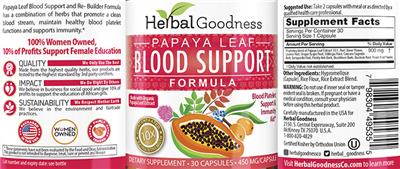
| Proprietary Blend | 900 mg | † |
| Papaya Leaf Extract10:1 | ||
| Red Clover | ||
| Licorice | ||
| Oregon Grape | ||
| Stillingia | ||
| Cascara Sagrada | ||
| Sarsaparilla | ||
| Prickly Ash | ||
| Buckthorn | ||
| Burdock | ||
| Peach, Powder |
Other ingredients: Hypromellose, Rice Flour, Rice Extract Blend
% Daily Values for: Adults and children 4 or more years of age.
Where this label comes from
An original label of the NIH's Dietary Supplement Label Database, entered there on 22 February 2024, shown here as it was entered. The NIH's record · picture of the label (PDF)
General information
- Product name
- Blood Support Papaya Leaf Formula
- Brand
- Herbal Goodness
- Barcode (UPC)
- 7 98304 49535 5
- Net contents
- 30 Capsule(s)
- Market status
- On market
- DSLD ID
- 303481
Classification
Label statements
Formula: Contains: Papaya Leaf Blood Support and re-builder formula has a combination of herbs that promote a clean blood stream, maintain healthy blood platelet functions and supports immunity.
Formula: Contains: Made with organic papaya leaf extract
FDA Statement of Identity: Dietary Supplement
Formula: Contains: Papaya Leaf Blood Support Formula 450 mg/capsule
Directions: Suggested use: Take 2 capsules with meal or as directed by a qualified health care professional.
Precautions: All Other: Warning: Do not use if inner seal or tamper evident seal is broken.
Precautions: Pregnant or Nursing or Prescription Medications: If pregnant or have a medical condition, consult your physician before using this herbal product.
Brand information
Carefully Manufactured in the USA for: Herbal Goodness, McKinney, TX, U.S.A.
More labels from Herbal Goodness
Labels only: each label is shown as printed on the bottle, with no grades, rankings or advice. A label in this database is not an endorsement of the product. Read the label on the bottle you buy: makers change their formulas. Reverse Age Lab is not affiliated with, or endorsed by, the National Institutes of Health or its Office of Dietary Supplements. The original labels come from the NIH’s public-domain data; the labels since are read by us. Search the Dietary Supplement Label Database.