
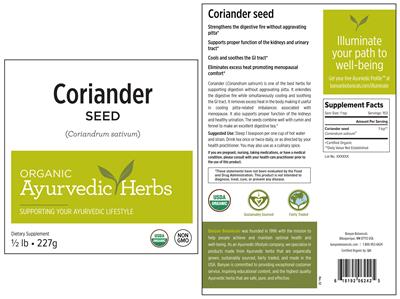
| Coriandercertified organic | 1 Teaspoon | † |
% Daily Values for: Adults and children 4 or more years of age.
Where this label comes from
An original label of the NIH's Dietary Supplement Label Database, entered there on 24 January 2024, shown here as it was entered. The NIH's record · picture of the label (PDF)
General information
- Product name
- Coriander Seed
- Brand
- Banyan Botanicals
- Barcode (UPC)
- 6 18192 06242 5
- Net contents
- 0.5 Pound(s); 227 Gram(s)
- Market status
- On market
- DSLD ID
- 305622
Classification
Label statements
Formula: Contains: (Coriandrum sativum) Organic ayurvedic herbs
FDA Statement of Identity: Dietary Supplement
Formulation: Does NOT Contain: Non GMO
Formula: Contains: Coriander (Coriandrum sativum) is one of the best herbs for supporting digestion without aggravating pitta. It enkindles the digestive fire while simultaneously cooling and soothing the GI tract. It removes excess heat in the body making it useful in cooling pitta-related imbalances associated with menopause. It also supports proper function of the kidneys and healthy urination. The seeds combine well with cumin and fennel to make an excellent digestive tea.
Directions: Suggested use: Steep 1 teaspoon per one cup of hot water and strain. Drink tea once or twice daily, or as directed by your health practitioner. You may also use as a culinary spice.
Precautions: Pregnant or Nursing or Prescription Medications: If you are pregnant, nursing, taking medications, or have a medical condition, please consult with your health care practitioner prior to the use of this product.
Brand information
Manufacturer: Banyan Botanicals, Albuquerque, NM, USA
More labels from Banyan Botanicals
Labels only: each label is shown as printed on the bottle, with no grades, rankings or advice. A label in this database is not an endorsement of the product. Read the label on the bottle you buy: makers change their formulas. Reverse Age Lab is not affiliated with, or endorsed by, the National Institutes of Health or its Office of Dietary Supplements. The original labels come from the NIH’s public-domain data; the labels since are read by us. Search the Dietary Supplement Label Database.