
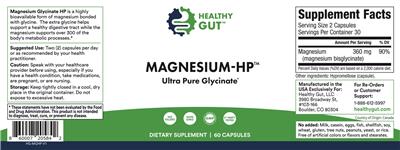
| Magnesium (as Magnesium Bisglycinate) | 360 mg | 90% |
Other ingredients: Hypromellose
% Daily Values for: Adults and children 4 or more years of age.
Where this label comes from
An original label of the NIH's Dietary Supplement Label Database, entered there on 23 April 2024, shown here as it was entered. The NIH's record · picture of the label (PDF)
General information
- Product name
- Magnesium-HP
- Brand
- Healthy Gut
- Barcode (UPC)
- 8 60007 20584 2
- Net contents
- 60 Capsule(s)
- Market status
- On market
- DSLD ID
- 308951
Classification
Label statements
Formula: Contains: Magnesium Glycinate HP is a highly bioavailable form of magnesium bonded with glycine. The extra glycine helps support a healthy digestive tract while the magnesium supports over 300 of the body's metabolic processes.
Directions: Suggested use: Two (2) capsules per day or as recommended by your health practitioner.
Precautions: Pregnant or Nursing or Prescription Medications: Caution: Speak with your healthcare provider before using, especially if you have a health condition, take medications, are pregnant, or are nursing.
Storage: Storage: Keep tightly closed in a cool, dry place in the original container. Do not expose to excessive heat.
Formula: Contains: Ultra pure glycinate
Formulation: Does NOT Contain: No fillers Non GMO
FDA Statement of Identity: Dietary Supplement
Formulation: Does NOT Contain: No added: Milk, casein, eggs, fish, shellfish, soy, wheat, gluten, tree nuts, peanuts, yeast, or rice. Free of artificial colors or flavors and stearates.
Brand information
Manufactured in the USA exclusively for: Healthy Gut, LLC, Boulder, CO
More labels from Healthy Gut
Labels only: each label is shown as printed on the bottle, with no grades, rankings or advice. A label in this database is not an endorsement of the product. Read the label on the bottle you buy: makers change their formulas. Reverse Age Lab is not affiliated with, or endorsed by, the National Institutes of Health or its Office of Dietary Supplements. The original labels come from the NIH’s public-domain data; the labels since are read by us. Search the Dietary Supplement Label Database.