
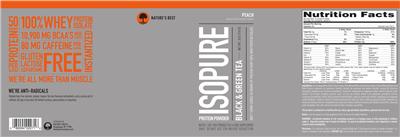
| Calories | 220 {Calories} | |
| Calories from Fat | 5 {Calories} | |
| Total Fat | 0.5 g | 1% |
| Saturated Fat | 0 g | 3% |
| Trans Fat | 0 g | |
| Cholesterol | 5 mg | 4% |
| Sodium | 470 mg | 20% |
| Potassium | 750 mg | 21% |
| Total Carbohydrates | 1 g | 0% |
| Dietary Fiber | 0 g | 0% |
| Sugar | 0 g | |
| Protein | 50 g | 100% |
| Vitamin A | 0 Not Present | 50% |
| Vitamin C | 0 Not Present | 50% |
| Calcium | 0 Not Present | 70% |
| Iron | 0 Not Present | 2% |
| Vitamin E | 0 Not Present | 50% |
| Vitamin K | 0 Not Present | 50% |
| Thiamine | 0 Not Present | 50% |
| Riboflavin | 0 Not Present | 50% |
| Niacin | 0 Not Present | 50% |
| Vitamin B6 | 0 Not Present | 50% |
| Folate | 0 Not Present | 50% |
| Vitamin B12 | 0 Not Present | 50% |
| Biotin | 0 Not Present | 50% |
| Pantothenic Acid | 0 Not Present | 50% |
| Phosphorus | 0 Not Present | 60% |
| Iodine | 0 Not Present | 50% |
| Magnesium | 0 Not Present | 50% |
| Zinc | 0 Not Present | 50% |
| Selenium (as L-Selenomethionine) | 0 Not Present | 50% |
| Copper | 0 Not Present | 50% |
| Manganese | 0 Not Present | 50% |
| Chromium | 0 Not Present | 50% |
| Molybdenum | 0 Not Present | 50% |
| Chloride | 0 Not Present | 20% |
Other ingredients: ion exchange Whey (Milk) Protein isolate, microfiltered Whey (Milk) Protein isolate, Vitamin/Mineral/Amino Acid Blend, black and green tea powder, Citric Acid, Natural and Artificial flavor, Sucralose, Soy Lecithin
% Daily Values for: Adults and children 4 or more years of age.
Where this label comes from
An original label of the NIH's Dietary Supplement Label Database, entered there on 25 March 2014, shown here as it was entered. The NIH's record
General information
- Product name
- Isopure Black & Green Tea Peach
- Brand
- Nature's Best
- Barcode (UPC)
- 0 89094 02271 6
- Net contents
- 3 lb; 1361 Gram(s)
- Market status
- Off market
- DSLD ID
- 31367
Classification
- Supplement form
- Powder
- Product type
- Amino acid/Protein
- Claim types on the label
- Nutrient, All Other
- Intended for
- Adult (18 - 50 Years), Gluten Free
Label statements
Formula: Contains: 50 GRAMS PROTEIN PER SERVING
Formula: Contains: 100% WHEY PROTEIN ISOLATE 10,900 MG BCAA'S PER SERVING 80 MG CAFFEINE PER SERVING
Formulation: Does NOT Contain: GLUTEN LACTOSE ASPARTAME FREE
Formula: Contains: Isopure Tea has flavonoid antioxidants, and a serious jolt of caffeine, 80 mgs to be exact!
Formulation: Does NOT Contain: All without lactose, preservatives or impurities.
FDA Statement of Identity: NOTICE: USE THIS PRODUCT AS A FOOD SUPPLEMENT ONLY.
Precautions: All Other: NOTICE: USE THIS PRODUCT AS A FOOD SUPPLEMENT ONLY. DO NOT USE FOR WEIGHT REDUCTION.
Formula: Contains: ONLY 1 GRAM CARBS! 50 GRAMS OF PROTEIN FROM 100% WHEY PROTEIN ISOLATE
Precautions: Allergies: This product is produced in a facility with soy, dairy, egg and wheat ingredients, peanuts and tree nuts.
Precautions: Children: WARNING: Accidental overdose of iron containing products is a leading cause of fatal poisoning in children under 6. Keep this product out of reach of children. In case of accidental overdose, call a physician or poison control center immediately.
Directions: Directions: For a delicious, fruity tea drink, mix 2 scoopfuls (65g) with 12 fluid ounces of water in a shaker or blender. If a shaker or a blender is not convenient, ISOPURE TEA can be stirred into solution with a spoon. Drink one serving daily.
Precautions: All Other: Notice: Use this product as a food supplement only. Do not use for weight reduction.
Brand information
DISTRIBUTED BY: NATURE'S BEST(R), Hauppauge, NY
More labels from Nature's Best
Labels only: each label is shown as printed on the bottle, with no grades, rankings or advice. A label in this database is not an endorsement of the product. Read the label on the bottle you buy: makers change their formulas. Reverse Age Lab is not affiliated with, or endorsed by, the National Institutes of Health or its Office of Dietary Supplements. The original labels come from the NIH’s public-domain data; the labels since are read by us. Search the Dietary Supplement Label Database.