
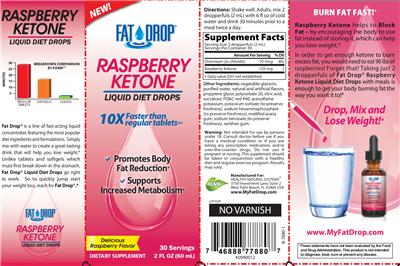
| Chromium (as as Chromium Chloride)Chromium (Form: as Chromium Chloride) | 10 mcg | 8% |
| Raspberry Ketone | 125 mg | † |
Other ingredients: Vegetable Glycerin, purified Water, Natural and Artificial flavors, Propylene Glycol, polysorbate 20, Citric Acid, Sucralose, FD&C Red #40, Acesulfame Potassium, potassium sorbate, Sodium Hexametaphosphate, modified acacia gum, sodium benzoate, Xanthan Gum
% Daily Values for: Adults and children 4 or more years of age.
Where this label comes from
An original label of the NIH's Dietary Supplement Label Database, entered there on 25 March 2014, shown here as it was entered. The NIH's record
General information
- Product name
- Raspberry Ketone Liquid Diet Drops
- Brand
- Fat Drop
- Barcode (UPC)
- 7 46888 77880 7
- Net contents
- 2 fl. Oz.; 60 mL
- Market status
- On market
- DSLD ID
- 31517
Classification
- Supplement form
- Liquid
- Product type
- Botanical with Nutrients
- Claim types on the label
- All Other, Structure/Function
- Intended for
- Adult (18 - 50 Years)
Label statements
Directions: Simply mix with water to create a great-tasting drink that will help you lose weight.
Precautions: Children: Warning: Not intended for use by persons under 18.
Directions: Directions: Shake well. Adults, mix 2 dropperfuls (2 mL) with 6 oz of cold water and drink 30 minutes prior to a meal twice a day.
FDA Statement of Identity: DIETARY SUPPLEMENT
Precautions: Pregnant or Nursing or Prescription Medications: Consult doctor before use if you have a medical condition or if you are taking any prescription medications and/or over-the-counter drugs. Do not use if pregnant or nursing.
Brand information
Manufactured For: HEALTHY NATURAL SYSTEMS, West Palm Beach, FL, USA
More labels from Fat Drop
Labels only: each label is shown as printed on the bottle, with no grades, rankings or advice. A label in this database is not an endorsement of the product. Read the label on the bottle you buy: makers change their formulas. Reverse Age Lab is not affiliated with, or endorsed by, the National Institutes of Health or its Office of Dietary Supplements. The original labels come from the NIH’s public-domain data; the labels since are read by us. Search the Dietary Supplement Label Database.