
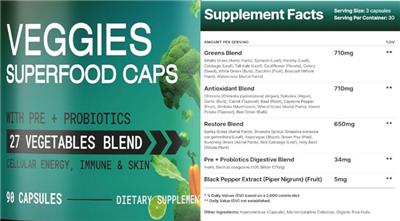
| Greens Blend | 710 mg | † |
| Alfalfa Grass | ||
| Spinach | ||
| Parsley | ||
| Cabbage | ||
| Tall Kale | ||
| Cauliflower | ||
| Celery | ||
| White Onion | ||
| Zucchini | ||
| Broccoli | ||
| Watercress | ||
| Antioxidant Blend | 710 mg | † |
| Chlorella | ||
| Spirulina | ||
| Garlic | ||
| Carrot | ||
| Beet | ||
| Cayenne Pepper | ||
| Shiitake Mushroom | ||
| Wheat grass | ||
| Sweet Potato | ||
| Red Onion | ||
| Restore Blend | 650 mg | † |
| Barley Grass | ||
| Brussels Sprout | ||
| Asparagus | ||
| Green Pea | ||
| Bunching Onion | ||
| Red Cabbage | ||
| Holy Basil | ||
| Pre + Probiotics Digestive Blend | 34 mg | † |
| Inulin | ||
| Bacillus coagulans100 Billion CFU/g | ||
| Black Pepper Fruit Extract | 5 mg | † |
Other ingredients: Hypromellose, Microcrystalline Cellulose, Rice Husk
% Daily Values for: Adults and children 4 or more years of age.
Where this label comes from
An original label of the NIH's Dietary Supplement Label Database, entered there on 25 July 2024, shown here as it was entered. The NIH's record · picture of the label (PDF)
General information
- Product name
- Veggies Superfood Caps
- Brand
- Ascanium
- Barcode (UPC)
- Not printed
- Net contents
- 90 Capsule(s)
- Market status
- On market
- DSLD ID
- 317079
Classification
- Supplement form
- Capsule
- Product type
- Other Combinations
- Claim types on the label
- All Other, Structure/Function
- Intended for
- Adult (18 - 50 Years)
Label statements
Formula: Contains: Veggie superfood caps with pre + probiotics 27 vegetables blend
FDA Statement of Identity: Dietary Supplement
Brand information
Not present: Ascanium
More labels from Ascanium
Labels only: each label is shown as printed on the bottle, with no grades, rankings or advice. A label in this database is not an endorsement of the product. Read the label on the bottle you buy: makers change their formulas. Reverse Age Lab is not affiliated with, or endorsed by, the National Institutes of Health or its Office of Dietary Supplements. The original labels come from the NIH’s public-domain data; the labels since are read by us. Search the Dietary Supplement Label Database.