
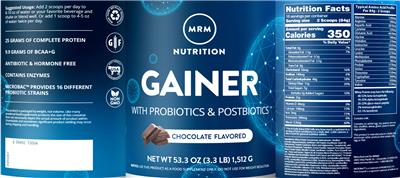
| Calories | 350 | |
| Total Fat | 6 g | 7% |
| Saturated Fat | 1.5 g | 7% |
| Polyunsaturated Fat | 0.5 g | |
| Monounsaturated Fat | 3.5 g | |
| Trans Fat | 0 g | |
| Cholesterol | 50 mg | 16% |
| Sodium | 140 mg | 6% |
| Total Carbohydrates | 49 g | 18% |
| Dietary Fiber | 11 g | 39% |
| Total Sugars | 7 g | |
| Added Sugars | 5 g | 10% |
| Protein | 25 g | |
| Vitamin D | 0 mcg | 0% |
| Calcium | 190 mg | 15% |
| Iron | 3 mg | 15% |
| Potassium | 290 mg | 6% |
| Niacin | 9.3 mg | 60% |
Other ingredients: Whey Protein Concentrate, Maltodextrin, VitaFiber, Sunflower Seed Oil, Maltodextrin, Sodium Caseinate, Monoglycerides, Diglycerides, Tocopherols, Tricalcium Phosphate, Trehalose, Cocoa, Powder, natural Chocolate flavor, Whey Protein Isolate, Micellar Casein, Sunflower Lecithin, Pure Ocean Sea Salt, Stevia Leaf Extract, Protease 4.5, Protease 6, Peptidase, Bromelain, Monk Fruit Extract, Lactobacillus acidophilus (La-02), Lactobacillus plantarum (LP09), Lactobacillus rhamnosus (LR06), Streptococcus thermophilus Y-8, Lactobacillus casei (LC03), Lactobacillus plantarum (LP01), Lactobacillus rhamnosus (GG), Lactobacillus rhamnosus (LR05), Lactobacillus reuteri (LRE02), Lactobacillus salivarius (CRL1328), Bifidobacterium animalis lactis (BS-01), Bifidobacterium breve (BR03), Bifidobacterium bifidum (BB01), Bifidobacterium longum (BL03), Bifidobacterium infantis BI02, Bifidobacterium animalis lactis (BA05)
% Daily Values for: Adults and children 4 or more years of age.
Where this label comes from
An original label of the NIH's Dietary Supplement Label Database, entered there on 22 November 2024, shown here as it was entered. The NIH's record · picture of the label (PDF)
General information
- Product name
- Gainer Chocolate Flavored
- Brand
- MRM Nutrition
- Barcode (UPC)
- 6 09492 73004
- Net contents
- 53.3 Ounce(s); 3.3 Pound(s); 1512 Gram(s)
- Market status
- On market
- DSLD ID
- 319089
Classification
- Supplement form
- Powder
- Product type
- Non-Nutrient/Non-Botanical
- Claim types on the label
- Nutrient, All Other
- Intended for
- Adult (18 - 50 Years), Gluten Free
Label statements
Directions: Suggested Usage: Add 2 scoops per day to 8-10 oz of water or your favorite beverage and shake or blend well. Or add 1 scoop to 4-5 oz of water twice per day.
Formula: Contains: 25 Grams of complete protein 9.9 Grams of BCAA+G Contains enzymes Microbac provides 16 different probiotic strains
Formulation: Does NOT Contain: Antibiotic & hormone free
Storage: This product is packaged by weight, not volume. Like many powdered food/supplement products the size of this container does not necessarily depict the actual amount of product within. Unavoidable and sometimes significant product settling may occur during shipping and handling.
Formulation: Does NOT Contain: GF (Gluten free) Non GMO
Formula: Contains: Gainer Chocolate Flavored with probiotics & postbiotics
Precautions: All Other: Notice: Use this product as a food supplement only. Do not use for weight reduction.
Precautions: Allergies: Contains milk.
Formulation: Does NOT Contain: Contains no added egg, soy, peanut, tree nut, fish, shellfish, wheat, gluten, yeast or sesame ingredients.
Precautions: Allergies: This product is manufactured in a facility that processes other products that contain milk, egg or fish.
Brand information
Manufactured for: MRM, Oceanside, CA, USA
More labels from MRM Nutrition
Labels only: each label is shown as printed on the bottle, with no grades, rankings or advice. A label in this database is not an endorsement of the product. Read the label on the bottle you buy: makers change their formulas. Reverse Age Lab is not affiliated with, or endorsed by, the National Institutes of Health or its Office of Dietary Supplements. The original labels come from the NIH’s public-domain data; the labels since are read by us. Search the Dietary Supplement Label Database.