
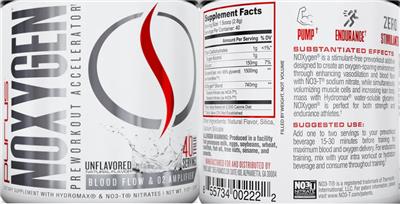
| Total Carbohydrates | 1 g | <1% |
| Sugar Alcohol | 1 g | |
| Sodium | 150 mg | 7% |
| Hydromax (as Glycerol)standardized minimum 65% glycerol | 1,500 mg | † |
| NOXygen Blend | 740 mg | † |
| NO3-T (as Sodium Nitrate) | ||
| NO3-T (as Betaine Nitrate) |
Other ingredients: Natural Flavors, Silica, Calcium Silicate
% Daily Values for: Adults and children 4 or more years of age.
Where this label comes from
An original label of the NIH's Dietary Supplement Label Database, entered there on 23 February 2025, shown here as it was entered. The NIH's record · picture of the label (PDF)
General information
- Product name
- NOXygen Unflavored
- Brand
- Purus
- Barcode (UPC)
- 8 55734 00222 2
- Net contents
- 112 Gram(s); 3.9 Ounce(s)
- Market status
- On market
- DSLD ID
- 320861
Classification
- Supplement form
- Powder
- Product type
- Other Combinations
- Claim types on the label
- All Other, Structure/Function
- Intended for
- Adult (18 - 50 Years)
Label statements
Formula: Contains: Natural Flavor
FDA Statement of Identity: Dietary Supplement
Formula: Contains: Dietary supplement with hydromax & N03-T Nitrates
Precautions: Allergies: Allergen Warning: Produced in a facility that processes milk, eggs, soybeans, wheat, shellfish, fish oil, tree nuts, sesame, and peanuts.
Formulation: Does NOT Contain: Zero stimulants
Directions: Suggested use: Add one to two servings to your preworkout beverage 15-30 minutes before training for maximum blood and oxygen delivery. For endurance training, mix with your intra workout or hydration beverage and consume throughout training.
Brand information
Manufactured for and Distributed by: Purus Labs, Alpharetta, GA
More labels from Purus
Labels only: each label is shown as printed on the bottle, with no grades, rankings or advice. A label in this database is not an endorsement of the product. Read the label on the bottle you buy: makers change their formulas. Reverse Age Lab is not affiliated with, or endorsed by, the National Institutes of Health or its Office of Dietary Supplements. The original labels come from the NIH’s public-domain data; the labels since are read by us. Search the Dietary Supplement Label Database.