
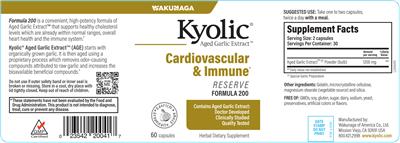
| Aged Garlic Extract Powderspecial garlic preparation | 1,200 mg | † |
Other ingredients: Gelatin, Microcrystalline Cellulose, Magnesium Stearate, Silica
% Daily Values for: Adults and children 4 or more years of age.
Where this label comes from
An original label of the NIH's Dietary Supplement Label Database, entered there on 22 November 2024, shown here as it was entered. The NIH's record · picture of the label (PDF)
General information
- Product name
- Kyolic Formula 200
- Brand
- Kyolic
- Barcode (UPC)
- 0 23542 20041 7
- Net contents
- 60 Capsule(s)
- Market status
- On market
- DSLD ID
- 326218
Classification
Label statements
Formula: Contains: Formula 200 is a convenient, high-potency formula of Aged Garlic Extract that supports healthy cholesterol levels which are already within normal ranges, overall heart health and the immune system. Kyolic Aged Garlic Extract (AGE) starts with organically grown garlic. It is then aged using proprietary process which removes odor-causing compounds attributed to raw garlic and increases the bioavailable beneficial compounds.
Precautions: All Other: Do not use if outer safety band or inner seal is broken or missing.
Storage: Store in a cool, dry place with lid tightly closed.
Precautions: Children: Keep out of reach of children.
Formula: Contains: Kyolic Reserve Formula 200 Contains Aged Garlic Extract:
FDA Statement of Identity: Herbal Dietary Supplement
Directions: Suggested use: Take one to two capsules, twice a day with a meal.
Formulation: Does NOT Contain: Free of: GMOs, soy, gluten, sugar, dairy, sodium, years, preservatives, artificial colors or flavors.
Brand information
Manufactured by: Wakunaga of America Co., Ltd., Mission Viejo, CA, USA
More labels from Kyolic
Labels only: each label is shown as printed on the bottle, with no grades, rankings or advice. A label in this database is not an endorsement of the product. Read the label on the bottle you buy: makers change their formulas. Reverse Age Lab is not affiliated with, or endorsed by, the National Institutes of Health or its Office of Dietary Supplements. The original labels come from the NIH’s public-domain data; the labels since are read by us. Search the Dietary Supplement Label Database.