
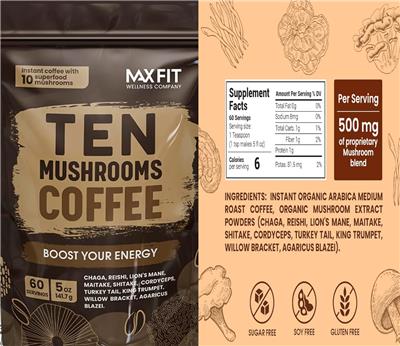
| Calories | 6 | |
| Total Fat | 0 g | 0% |
| Sodium | 8 mg | 0% |
| Total Carbohydrates | 1 g | 1% |
| Fiber | 1 g | 2% |
| Protein | 1 g | |
| Potassium | 81.6 mg | 2% |
Other ingredients: Arabica Coffee, Chaga Extract, Powder, Reishi Extract, Powder, Lion's Mane Extract, Powder, Maitake Extract, Powder, Shiitake Extract, Powder, Cordyceps extract powder, Turkey Tail Extract, Powder, King Trumpet Extract, Powder, Willow Bracket Extract, Powder, Agaricus blazei Extract, Powder
% Daily Values for: Adults and children 4 or more years of age.
Where this label comes from
An original label of the NIH's Dietary Supplement Label Database, entered there on 24 April 2025, shown here as it was entered. The NIH's record · picture of the label (PDF)
General information
- Product name
- Ten Mushrooms Coffee
- Brand
- Max Fit Wellness Company
- Barcode (UPC)
- Not printed
- Net contents
- 5 Ounce(s); 141.7 Gram(s)
- Market status
- On market
- DSLD ID
- 329205
Classification
Label statements
Formula: Contains: Instant coffee with 10 superfood mushrooms Chaga, reishi, lion's mane, maitake, shitake, cordyceps, turkey tail, king trumpet, willow bracket, agaricus, blazei.
Formula: Contains: 500 mg of proprietary mushroom blend per serving
Formulation: Does NOT Contain: Sugar free Soy free Gluten free
Brand information
Manufacturer: Max Fit Wellness Company
Labels only: each label is shown as printed on the bottle, with no grades, rankings or advice. A label in this database is not an endorsement of the product. Read the label on the bottle you buy: makers change their formulas. Reverse Age Lab is not affiliated with, or endorsed by, the National Institutes of Health or its Office of Dietary Supplements. The original labels come from the NIH’s public-domain data; the labels since are read by us. Search the Dietary Supplement Label Database.