
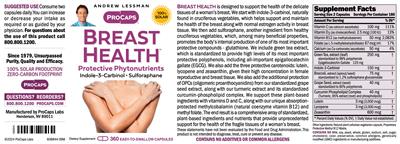
| Vitamin C (as Calcium Ascorbate) | 100 mg | 111% |
| Vitamin D3 (as Cholecalciferol)100 IU | 2.5 mcg | 13% |
| Vitamin B12 (as Methylcobalamin) | 50 mcg | 2,083% |
| Folate (as L-5-Methyltetrahydrofolate) | 67 mcg DFE | 17% |
| Calcium (as Calcium Ascorbate, Calcium Carbonate) | 50 mg | 4% |
| Green Tea Leaf Extract (as Polyphenols)standardized to 98% polyphenols | 250 mg | † |
| Epigallocatechin Gallate | 125 mg | |
| Indole-3-Carbinol | 150 mg | † |
| Broccoli Seed, Sprout Extract (as Broccoli Seed Extract, Broccoli Sprout Extract)standardized to 1.2% sulforaphane glucosinolate | 75 mg | † |
| Grape Seed Extract (as Polyphenols)standardized to 80% polyphenols | 40 mg | † |
| Curcumin Phospholipid Complex (as Phospholipids, Turmeric Root Extract)turmeric 95% extract | 40 mg | † |
| Lutein3,000 mcg | 3 mg | † |
| Lycopene3,000 mcg | 3 mg | † |
| Zeaxanthin | 600 mcg | † |
Other ingredients: Cellulose, Natural, Proprietary Protected Methyl B12 Matrix
% Daily Values for: Adults and children 4 or more years of age.
Where this label comes from
An original label of the NIH's Dietary Supplement Label Database, entered there on 24 July 2025, shown here as it was entered. The NIH's record · picture of the label (PDF)
General information
- Product name
- Breast Health
- Brand
- ProCaps
- Barcode (UPC)
- 548390
- Net contents
- 360 Easy-To-Swallow Capsule(s)
- Market status
- On market
- DSLD ID
- 331519
Classification
- Supplement form
- Capsule
- Product type
- Other Combinations
- Claim types on the label
- Nutrient, All Other, Structure/Function
- Intended for
- No Allergies, Adult Female (18 - 50 Years), Gluten Free, Dairy Free, Sugar Free
Label statements
Directions: Suggested use Consume two capsules daily. You can increase or decrease your intake as required or as guided by your physician.
Formula: Contains: Protective Phytonutrients Indole-3-carbinol Sulforaphane
FDA Statement of Identity: Dietary Supplement
Formula: Contains: Breast Health is designed to support the health of the delicate tissues of a woman's breast. We start with indole-3-carbinol, naturally found in cruciferous vegetables, which helps support and maintain the health of the breast along with normal estrogen activity in breast tissue. We then add sulforaphane, another ingredient from healthy cruciferous vegetables, which, among many beneficial properties, promotes the body's internal production of one of its more important protective compounds - glutathione. We include green tea extract, which is standardized to provide high levels of its most important protective polyphenols, including all-important epigallocatechin gallate (EGCG). We also add the three protective carotenoids: lutein, lycopene and zeaxanthin, given their high concentration in female reproductive and breast tissue. We also add the additional protection of OPCs (oligomeric proanthocyanidins) from our standardized grape seed extract, along with our turmeric extract and its standardized curcumin-phospholipid complex. We support these plant-based ingredients with vitamins D and C, along with our unique absorption-protected methylcobalamin (natural coenzyme vitamin B12) and methyl folate. The end result is a comprehensive array of standardized, plant-based ingredients and nutrients that provide unprecedented support for the health of the fragile tissues of a woman's breast.
Formulation: Does NOT Contain: Contains no additives or common allergens
Formulation: Does NOT Contain: Contains No milk, soy, yeast, wheat, gluten, sodium, salt, sugar, cholesterol, color, preservative, common allergens, genetically modified (GMO) ingredients or manufacturing additives.
Brand information
Manufactured by: ProCaps Labs, Henderson, NV
More labels from ProCaps
Labels only: each label is shown as printed on the bottle, with no grades, rankings or advice. A label in this database is not an endorsement of the product. Read the label on the bottle you buy: makers change their formulas. Reverse Age Lab is not affiliated with, or endorsed by, the National Institutes of Health or its Office of Dietary Supplements. The original labels come from the NIH’s public-domain data; the labels since are read by us. Search the Dietary Supplement Label Database.