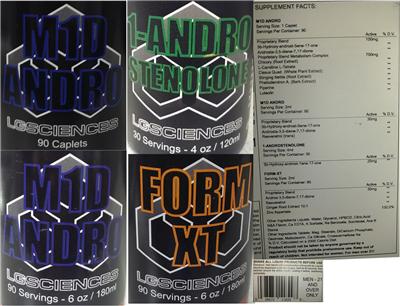
| 3b-Hydroxy-androst-1ene-17-one | 20 mg |
Other ingredients: Water, Glycerol, HPBCD, Citric Acid, N&A Flavor, Ca EDTA, K Sorbate, Na Benzoate, Sucralose, Ace K, Stevia
% Daily Values for: Adults and children 4 or more years of age.
Where this label comes from
An original label of the NIH's Dietary Supplement Label Database, entered there on 23 May 2014, shown here as it was entered. The NIH's record
General information
- Product name
- 1-Androstenolone
- Brand
- LG Sciences
- Barcode (UPC)
- 0 28672 11829 8
- Net contents
- 4 oz.; 120 mL
- Market status
- On market
- DSLD ID
- 33300
Classification
- Supplement form
- Other (e.g. tea bag)
- Product type
- Non-Nutrient/Non-Botanical
- Claim types on the label
- All Other
- Intended for
- Adult Male (18-50 Years)
Label statements
Precautions: All Other: Product should not be taken by anyone governed by a regulatory body that prohibits prohormone use.
Precautions: Children: Keep out of reach of children.
Precautions: All Other: Not intended for women.
Directions: SHAKE ALL LIQUID PRODUCTS BEFORE USE Directions: Take tablets with a small portion of food with fat. Liquids should be dispensed under the tongue, held for 60 seconds, then swished around the entire mouth, coating it before, swallowing completely.
Precautions: All Other: MEN - 21 AND OVER ONLY
Brand information
Not Present: LG Sciences
More labels from LG Sciences
Labels only: each label is shown as printed on the bottle, with no grades, rankings or advice. A label in this database is not an endorsement of the product. Read the label on the bottle you buy: makers change their formulas. Reverse Age Lab is not affiliated with, or endorsed by, the National Institutes of Health or its Office of Dietary Supplements. The original labels come from the NIH’s public-domain data; the labels since are read by us. Search the Dietary Supplement Label Database.