
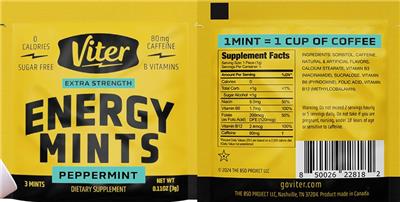
| Calories | 0 | |
| Total Carbohydrates | <1 g | <1% |
| Sugar Alcohol | <1 g | |
| Niacin | 8 mg | 50% |
| Vitamin B6 | 1.7 mg | 100% |
| Folate | 200 mg DFE | 50% |
| Folic Acid | 120 mcg | |
| Vitamin B12 | 2.4 mcg | 100% |
| Caffeine | 80 mg | † |
Other ingredients: Sorbitol, Caffeine, Natural & Artificial Flavors, Calcium Stearate, Vitamin B3, Sucralose, Vitamin B6, Folic Acid, Vitamin B12
% Daily Values for: Adults and children 4 or more years of age.
Where this label comes from
An original label of the NIH's Dietary Supplement Label Database, entered there on 21 May 2025, shown here as it was entered. The NIH's record · picture of the label (PDF)
General information
- Product name
- Extra Strength Energy Mints Peppermint
- Brand
- Viter
- Barcode (UPC)
- 8 50026 22818 2
- Net contents
- 3 Mint(s); 0.11 Ounce(s); 3 Gram(s)
- Market status
- On market
- DSLD ID
- 333803
Classification
- Supplement form
- Other (e.g. tea bag)
- Product type
- Other Combinations
- Claim types on the label
- Nutrient, All Other
- Intended for
- Adult (18 - 50 Years), Kosher, Women (not pregnant or lactating), Sugar Free
Label statements
Formulation: Does NOT Contain: 0 calories Sugar free
Formula: Contains: 80 mg caffeine B Vitamins
FDA Statement of Identity: Dietary Supplement
Precautions: All Other: Warning: Do not exceed 2 servings hourly or 5 servings daily.
Precautions: Pregnant or Nursing or Prescription Medications: Do not take if you are pregnant, nursing, under 18 years of age or sensitive to caffeine.
Precautions: Children: Do not take if you are pregnant, nursing, under 18 years of age or sensitive to caffeine.
Brand information
Manufacturer: The BSD Project LLC, Nashville, TN
Labels only: each label is shown as printed on the bottle, with no grades, rankings or advice. A label in this database is not an endorsement of the product. Read the label on the bottle you buy: makers change their formulas. Reverse Age Lab is not affiliated with, or endorsed by, the National Institutes of Health or its Office of Dietary Supplements. The original labels come from the NIH’s public-domain data; the labels since are read by us. Search the Dietary Supplement Label Database.