
| Energy18 kcal | 77 kJ | |
| Energy90 kcal | 385 kJ | |
| Fat | 0 g | |
| Saturated Fat | 0 g | |
| Carbohydrates | 0 g | |
| Sugar | 0 g | |
| Protein | 4 g | |
| Salt | <0.01 g |
Other ingredients: Water, Whey Protein Isolate, Natural Flavors, Carrot, Safflower, Citric Acid, Sucralose, E 900
% Daily Values for: Adults and children 4 or more years of age.
Where this label comes from
An original label of the NIH's Dietary Supplement Label Database, entered there on 22 August 2025, shown here as it was entered. The NIH's record · picture of the label (PDF)
General information
- Product name
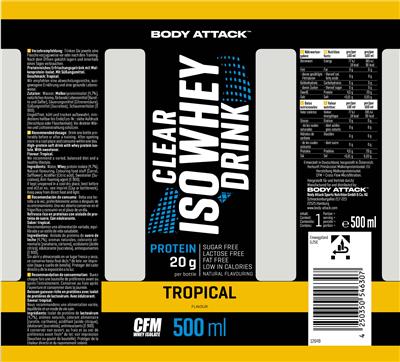
- Clear Iso Whey Drink Tropical
- Brand
- Body Attack
- Barcode (UPC)
- 4 250350 546307
- Net contents
- 500 mL
- Market status
- On market
- DSLD ID
- 337754
Classification
- Supplement form
- Liquid
- Product type
- Amino acid/Protein
- Claim types on the label
- Nutrient, All Other
- Intended for
- Adult (18 - 50 Years), Sugar Free
Label statements
Directions: Recommended dosage: Drink one bottle preferably before or after a training.
Storage: After opening store in a cool place and consume within one day.
Formula: Contains: High-protein soft drink with whey protein isolate. With sweetener. Flavour: Tropical.
Directions: We recommend a varied, balanced diet and a healthy lifestyle.
Storage: If kept unopened in a cool dry place, best before end of/Lot no.: see imprint (cap or bottleneck). Keep away from direct heat and light.
Formula: Contains: Clear IsoWhey Drink Protein 20 g per bottle Low in calories Natural flavouring Tropical flavour CFM whey isolate
Formulation: Does NOT Contain: Sugar free Lactose free Fat free
Brand information
Manufactured for and Distributed by: Body Attack Sports Nutrition GmbH & Co. KG, Hamburg
More labels from Body Attack
Labels only: each label is shown as printed on the bottle, with no grades, rankings or advice. A label in this database is not an endorsement of the product. Read the label on the bottle you buy: makers change their formulas. Reverse Age Lab is not affiliated with, or endorsed by, the National Institutes of Health or its Office of Dietary Supplements. The original labels come from the NIH’s public-domain data; the labels since are read by us. Search the Dietary Supplement Label Database.