
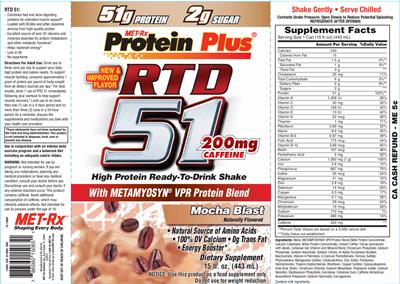
| Calories | 240 {Calories} | |
| Calories from FatCalories (Form: from Fat) | 15 {Calories} | |
| Total Fat | 1.5 g | 2% |
| Saturated Fat | 1 g | 4% |
| Trans Fat | 0 g | † |
| Cholesterol | 35 mg | 11% |
| Total Carbohydrates | 6 g | 2% |
| Dietary Fiber | 2 g | 8% |
| Sugar | 2 g | † |
| Protein | 51 g | 102% |
| Vitamin A | 1,459 IU | 29% |
| Vitamin C | 30 mg | 50% |
| Vitamin D | 169 IU | 42% |
| Vitamin E | 13 IU | 42% |
| Vitamin K | 22 mcg | 28% |
| Thiamine | 1 mg | 71% |
| Riboflavin | 0.89 mg | 52% |
| Niacin | 8.9 mg | 45% |
| Vitamin B6 | 0.97 mg | 49% |
| Folic Acid | 175 mcg | 44% |
| Vitamin B12 | 3.89 mcg | 65% |
| Biotin | 107 mcg | 36% |
| Pantothenic Acid | 5 mg | 50% |
| CalciumCalcium Note: 1 g | 1,000 mg | 100% |
| Iron | 2.8 mg | 15% |
| Phosphorus | 697 mg | 70% |
| Iodine | 35 mcg | 24% |
| Magnesium | 41 mg | 10% |
| Zinc | 2.8 mg | 19% |
| Selenium (as L-Selenomethionine) | 14 mcg | 20% |
| Copper | 0.3 mg | 17% |
| Manganese | 0.7 mg | 38% |
| Chromium | 29 mcg | 24% |
| Molybdenum | 19 mcg | 26% |
| Sodium | 170 mg | 7% |
| Potassium | 490 mg | 14% |
| Caffeine | 200 mg | † |
Other ingredients: Water, Metamyosyn VPR Protein Blend, Instant Coffee, Cocoa, Cellulose Gel, Vitamin and Mineral Blend, Dipotassium Phosphate, Sucralose, Cellulose Gum, Caffeine Anhydrous, Acesulfame Potassium, Sodium Hydroxide, Carrageenan
% Daily Values for: Adults and children 4 or more years of age.
Where this label comes from
An original label of the NIH's Dietary Supplement Label Database, entered there on 25 June 2014, shown here as it was entered. The NIH's record
General information
- Product name
- RTD 51 Mocha Blast
- Brand
- MET-Rx Protein Plus
- Barcode (UPC)
- 7 86560 15065 1
- Net contents
- 15 fl. Oz.; 443 mL
- Market status
- Off market
- DSLD ID
- 34739
Classification
- Supplement form
- Liquid
- Product type
- Amino acid/Protein
- Claim types on the label
- Nutrient, All Other
- Intended for
- Adult (18 - 50 Years)
Label statements
Formulation: Does NOT Contain: – No aspartame
Directions: Directions For Adult Use: Drink one to three cans per day to support your daily high protein and calorie needs. To support muscle-building, consume approximately 1 gram of protein per pound of body weight from all dietary sources per day.* For best results, drink 1 can of RTD 51 immediately following your workout to help support muscle recovery.* Limit use to no more than one (1) can in a 4-hour period and no more than three (3) cans in a 24-hour period.
Precautions: Pregnant or Nursing or Prescription Medications: WARNING: Not intended for use by pregnant or nursing women. If you are taking any medications, planning any medical procedure or have any medical condition, consult your doctor before use.
Precautions: All Other: Discontinue use and consult your doctor if any adverse reactions occur.
Formula: Contains: This product contains caffeine.
Precautions: All Other: This product contains caffeine. Avoid additional consumption of caffeine, which may intensify adverse effects.
Precautions: Children: Not intended for use by persons under the age of 18.
Precautions: Children: KEEP OUT OF REACH OF CHILDREN.
Formula: Contains: 51g PROTEIN 2g SUGAR
Formula: Contains: 200mg CAFFEINE
Formula: Contains: With METAMYOSYN(R) VPR Protein Blend
Formula: Contains: - 100% DV Calcium
Formulation: Does NOT Contain: - 0g Trans Fat
FDA Statement of Identity: Dietary Supplement
Directions: Shake Gently - Serve Chilled
Storage: REFRIGERATE AFTER OPENING
Formula: Contains: Contains milk ingredients.
Precautions: Allergies: Contains milk ingredients.
Brand information
Manufactured in the USA for: MET-Rx Nutrition, Inc., Boca Raton, FL
More labels from MET-Rx Protein Plus
Labels only: each label is shown as printed on the bottle, with no grades, rankings or advice. A label in this database is not an endorsement of the product. Read the label on the bottle you buy: makers change their formulas. Reverse Age Lab is not affiliated with, or endorsed by, the National Institutes of Health or its Office of Dietary Supplements. The original labels come from the NIH’s public-domain data; the labels since are read by us. Search the Dietary Supplement Label Database.