
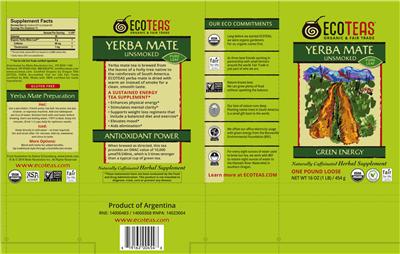
| Calories | 10 {Calories} | |
| organic Yerba mateorganic Yerba mate PlantPart: leaf Note: Fair for Life Fair Trade certified ingredient | 6 g | † |
| Caffeine | 60 mg | † |
| Theobromine | 7 mg | † |
% Daily Values for: Adults and children 4 or more years of age.
Where this label comes from
An original label of the NIH's Dietary Supplement Label Database, entered there on 10 October 2014, shown here as it was entered. The NIH's record
General information
- Product name
- Yerba Mate Unsmoked Green Energy
- Brand
- Ecoteas
- Barcode (UPC)
- 8 19162 00454 8
- Net contents
- 16 oz.; 1 lb; 454 Gram(s)
- Market status
- On market
- DSLD ID
- 37994
Classification
- Supplement form
- Unknown
- Product type
- Other Combinations
- Claim types on the label
- All Other, Structure/Function
- Intended for
- Adult (18 - 50 Years), Kosher, Organic, Gluten Free
Label statements
Formulation: Does NOT Contain: GLUTEN FREE
Directions: Yerba Mate Preparation Hot: Use a percolator, French press, tea ball, tea press, tea pot, strainer, or espresso machine. Add one tablespoon per 8 oz of water. Moisten herb with cool water before brewing. Don’t use boiling water; 170(0)F is ideal. Steep 4-6 minutes. Drink 1-2 cups daily for optimum results. Iced: Steep directly in cold water – no heat required. Stir and strain after 10+ minutes. Add ice, sweetener and citrus to taste. More Options: Blend with herbs for added benefits. Sip traditional-style through a bombilla (tea straw).
Formula: Contains: Naturally Caffeinated
FDA Statement of Identity: Herbal Supplement
Storage: USDA ORGANIC
Brand information
Distributed by: Mate Revolution Inc., Ashland, OR, USA
More labels from Ecoteas
Labels only: each label is shown as printed on the bottle, with no grades, rankings or advice. A label in this database is not an endorsement of the product. Read the label on the bottle you buy: makers change their formulas. Reverse Age Lab is not affiliated with, or endorsed by, the National Institutes of Health or its Office of Dietary Supplements. The original labels come from the NIH’s public-domain data; the labels since are read by us. Search the Dietary Supplement Label Database.