
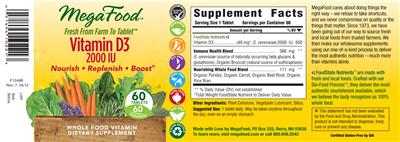
| FoodState Nutrients | ||
| Vitamin D3 | 2,000 IU | 500% |
| S. cerevisiae | 40 mg | |
| Immune Health Blend | 366 mg | † |
| S. cerevisiae (as source of naturally occurring Beta Glucans, & Glutathione)S. cerevisiae (Form: source of naturally occurring Beta Glucans, & Glutathione) Genus: S. Species: cerevisiae | ||
| organic Broccoliorganic Broccoli Note: natural source of Sulforaphane | ||
| Nourishing Whole Food Blend (Herb/Botanical) | 111 mg | † |
| organic Parsley | ||
| organic Carrot | ||
| organic Beet | ||
| organic Rice Bran |
Other ingredients: Cellulose, Plant, Vegetable Lubricant, Silica
% Daily Values for: Adults and children 4 or more years of age.
Where this label comes from
An original label of the NIH's Dietary Supplement Label Database, entered there on 25 March 2015, shown here as it was entered. The NIH's record
General information
- Product name
- Vitamin D3 2000 IU
- Brand
- MegaFood
- Barcode (UPC)
- 0 51494 10221 3
- Net contents
- 60 Tablet(s)
- Market status
- Off market
- DSLD ID
- 43429
Classification
- Supplement form
- Tablet or Pill
- Product type
- Other Combinations
- Claim types on the label
- Structure/Function
- Intended for
- Vegetarian, Adult (18 - 50 Years), Gluten Free, Dairy Free
Label statements
Formulation: Does NOT Contain: Certified Gluten-Free by QAI
Directions: Suggested Use: 1 tablet daily. May be taken anytime throughout the day, even on an empty stomach.
FDA Statement of Identity: WHOLE FOOD VITAMIN DIETARY SUPPLEMENT
Brand information
Made with Love by: MegaFood, Derry, NH
More labels from MegaFood
Labels only: each label is shown as printed on the bottle, with no grades, rankings or advice. A label in this database is not an endorsement of the product. Read the label on the bottle you buy: makers change their formulas. Reverse Age Lab is not affiliated with, or endorsed by, the National Institutes of Health or its Office of Dietary Supplements. The original labels come from the NIH’s public-domain data; the labels since are read by us. Search the Dietary Supplement Label Database.