
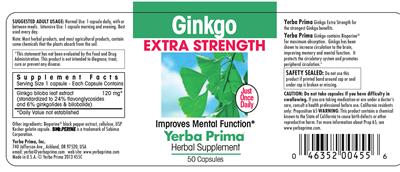
| Ginkgo biloba leaf extract (as & Bilobalide, standardized to Flavoneglycosides, and Ginkgolides)Ginkgo biloba leaf extract (Form: standardized to 24% Flavoneglycosides, and 6% Ginkgolides, & Bilobalide) PlantPart: leaf Genus: Ginkgo Species: biloba | 120 mg | † |
Other ingredients: Bioperine Black Pepper extract, Cellulose, USP Kosher Gelatin Capsule
% Daily Values for: Adults and children 4 or more years of age.
Where this label comes from
An original label of the NIH's Dietary Supplement Label Database, entered there on 24 March 2016, shown here as it was entered. The NIH's record
General information
- Product name
- Ginkgo Extra Strength
- Brand
- Yerba Prima
- Barcode (UPC)
- 0 46352 00455 6
- Net contents
- 50 Capsule(s)
- Market status
- On market
- DSLD ID
- 57984
Classification
Label statements
Directions: Suggested Adult Use: Normal Use: 1 capsule daily, with or between meals. Intensive Use: 1 capsule morning and evening. Best used every day.
Formula: Contains: Yerba Prima Ginkgo contains Bioperine for maximum absorption.
Precautions: All Other: SAFETY SEALED: Do not use this product if printed band around cap or seal under cap is broken or missing. CAUTION: Do not take capsules if you have difficulty in swallowing.
Precautions: Pregnant or Nursing or Prescription Medications: If you are taking medication or are under a doctor's care, consult a health professional before use.
Precautions: All Other: California residents only: Proposition 65 Warning: This product contains a chemical known to the State of California to cause birth defects or other reproductive harm. For more information about Prop 65, see www.yerbaprima.com.
Brand information
Manufacturer: Yerba Prima, Inc., Ashland, OR, USA
More labels from Yerba Prima
Labels only: each label is shown as printed on the bottle, with no grades, rankings or advice. A label in this database is not an endorsement of the product. Read the label on the bottle you buy: makers change their formulas. Reverse Age Lab is not affiliated with, or endorsed by, the National Institutes of Health or its Office of Dietary Supplements. The original labels come from the NIH’s public-domain data; the labels since are read by us. Search the Dietary Supplement Label Database.