
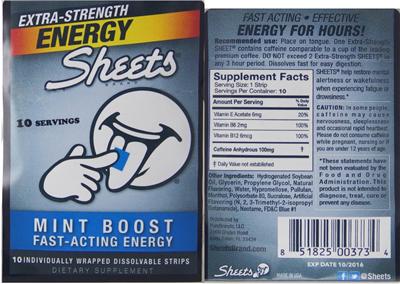
| Vitamin E Acetate | 6 mg | 20% |
| Vitamin B6 | 2 mg | 100% |
| Vitamin B12 | 6 mcg | 100% |
| Caffeine Anhydrous | 100 mg | † |
Other ingredients: hydrogenated Soybean Oil, Glycerin, Propylene Glycol, Natural flavoring, Water, Hypromellose, Pullulan, Menthol, Polysorbate 80, Sucralose, Artificial Flavoring, Neotame, FD&C Blue #1
% Daily Values for: Adults and children 4 or more years of age.
Where this label comes from
An original label of the NIH's Dietary Supplement Label Database, entered there on 24 February 2017, shown here as it was entered. The NIH's record
General information
- Product name
- Extra Strength Energy Sheets Mint Boost
- Brand
- Sheets Brand
- Barcode (UPC)
- 8 51825 00373 4
- Net contents
- 10 INDIVIDUALLY WRAPPED DISSOLVABLE STRIPS
- Market status
- Off market
- DSLD ID
- 70635
Classification
- Supplement form
- Other (e.g. tea bag)
- Product type
- Other Combinations
- Claim types on the label
- All Other, Structure/Function
- Intended for
- Adult (18 - 50 Years)
Label statements
FDA Statement of Identity: Dietary Supplement
Directions: Recommended use: Place on tongue.
Formula: Contains: One Extra-Strength Sheet contains caffeine comparable to a cup or the leading premium coffee.
Precautions: All Other: Do not exceed 2 Extra-Strength Sheets in any 3 hour period.
Precautions: All Other: Caution: In some people, caffeine may cause nervousness, sleeplessness and occasional rapid heartbeat.
Precautions: Pregnant or Nursing or Prescription Medications: Please do not consume caffeine while pregnant, nursing or if you are under 12 years or age.
Precautions: Children: Please do not consume caffeine while pregnant, nursing or if you are under 12 years or age.
Brand information
Distributed by: PureBrands, LLC, Boca Raton, FL
Labels only: each label is shown as printed on the bottle, with no grades, rankings or advice. A label in this database is not an endorsement of the product. Read the label on the bottle you buy: makers change their formulas. Reverse Age Lab is not affiliated with, or endorsed by, the National Institutes of Health or its Office of Dietary Supplements. The original labels come from the NIH’s public-domain data; the labels since are read by us. Search the Dietary Supplement Label Database.