
Liquid Glucosamine/Chonodroitin Maximum Strength Raspberry Flavor
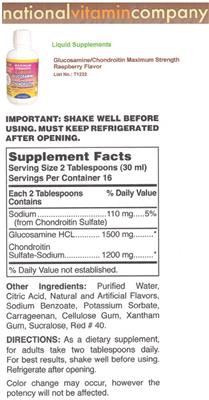
| Sodium (as from Chondroitin Sulfate)Sodium (Form: from Chondroitin Sulfate) | 110 mg | 5% |
| Glucosamine HCl | 1,500 mg | † |
| Chondroitin Sulfate-Sodium | 1,200 mg | † |
Other ingredients: purified Water, Citric Acid, Natural flavors, Artificial Flavors, Sodium Benzoate, Potassium Sorbate, Carrageenan, Cellulose Gum, Xanthan Gum, Sucralose, Red #40
% Daily Values for: Adults and children 4 or more years of age.
Where this label comes from
An original label of the NIH's Dietary Supplement Label Database, entered there on 24 February 2017, shown here as it was entered. The NIH's record
General information
- Product name
- Liquid Glucosamine/Chonodroitin Maximum Strength Raspberry Flavor
- Brand
- National Vitamin Company
- Barcode (UPC)
- Not printed
- Net contents
- N/A
- Market status
- Off market
- DSLD ID
- 71021
Classification
- Supplement form
- Liquid
- Product type
- Other Combinations
- Claim types on the label
- All Other
- Intended for
- Adult (18 - 50 Years)
Label statements
FDA Statement of Identity: Liquid Supplements
Directions: Important: Shake well before using.
Storage: Must keep refrigerated after opening.
Directions: Directions: As a dietary supplement, for adults take two tablespoons daily. For best results. shake well before using.
Storage: Refrigerate after opening.
Labels only: each label is shown as printed on the bottle, with no grades, rankings or advice. A label in this database is not an endorsement of the product. Read the label on the bottle you buy: makers change their formulas. Reverse Age Lab is not affiliated with, or endorsed by, the National Institutes of Health or its Office of Dietary Supplements. The original labels come from the NIH’s public-domain data; the labels since are read by us. Search the Dietary Supplement Label Database.