
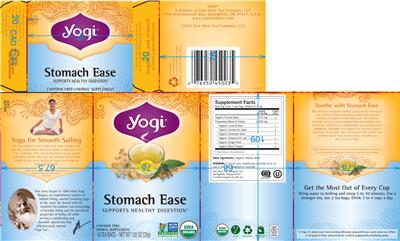
| organic Fennel | 314 mg | † |
| Proprietary Blend of Herbs | 1,258 mg | |
| organic Licorice | † | |
| organic Cardamom | † | |
| organic Coriander | † | |
| Peppermint | † | |
| organic Ginger | † | |
| organic Black Pepper | † |
Other ingredients: organic Barley Malt
% Daily Values for: Adults and children 4 or more years of age.
Where this label comes from
An original label of the NIH's Dietary Supplement Label Database, entered there on 23 June 2017, shown here as it was entered. The NIH's record
General information
- Product name
- Stomach Ease
- Brand
- Yogi
- Barcode (UPC)
- 0 76950 45003 5
- Net contents
- 16 Tea Bag(s); 1.02 Oz(s); 29 Gram(s)
- Market status
- Off market
- DSLD ID
- 73487
Classification
- Supplement form
- Other (e.g. tea bag)
- Product type
- Botanical
- Claim types on the label
- All Other, Structure/Function
- Intended for
- Vegan, Vegetarian, Adult (18 - 50 Years), Kosher, Organic
Label statements
Formulation: Does NOT Contain: Caffeine free
FDA Statement of Identity: Herbal Supplement
Formulation: Does NOT Contain: Non GMO
Formula: Contains: We combine perfectly sweet yet earthy fennel seed and licorice with a refreshing combination of peppermint and warming herbs cardamom, coriander and ginger that can help support digestion.
Directions: Get the most out of every cup Bring water to boiling and steep 5 to 10 minutes. For a stronger tea, use 2 tea bags. Drink 3 to 4 cups a day.
Brand information
Manufacturer: YOGI A product of East West Tea Company, LLC, Springfield, OR, U.S.A.
More labels from Yogi
Labels only: each label is shown as printed on the bottle, with no grades, rankings or advice. A label in this database is not an endorsement of the product. Read the label on the bottle you buy: makers change their formulas. Reverse Age Lab is not affiliated with, or endorsed by, the National Institutes of Health or its Office of Dietary Supplements. The original labels come from the NIH’s public-domain data; the labels since are read by us. Search the Dietary Supplement Label Database.