
High Absorption CoQ10 with BioPerine 200 mg
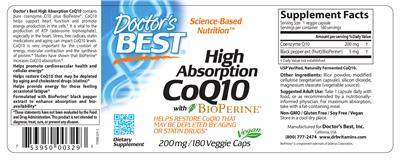
| Coenzyme Q10 | 200 mg | † |
| Black Pepper ext. | 5 mg | † |
Other ingredients: Rice powder, Modified Cellulose, Silicon Dioxide, Magnesium Stearate
% Daily Values for: Adults and children 4 or more years of age.
Where this label comes from
An original label of the NIH's Dietary Supplement Label Database, entered there on 22 December 2017, shown here as it was entered. The NIH's record
General information
- Product name
- High Absorption CoQ10 with BioPerine 200 mg
- Brand
- Doctor's Best
- Barcode (UPC)
- 7 53950 00329 3
- Net contents
- 180 Veggie Cap(s)
- Market status
- Off market
- DSLD ID
- 82241
Classification
- Supplement form
- Capsule
- Product type
- Other Combinations
- Claim types on the label
- All Other, Structure/Function
- Intended for
- Vegan, Vegetarian, Adult (18 - 50 Years), Gluten Free
Label statements
Formula: Contains: Doctor’s Best High Absorption CoQ10 contains pure coenzyme Q10 plus BioPerine.
Precautions: Pregnant or Nursing or Prescription Medications: Stress, free radicals, statin medications and aging can impact CoQ10 levels.
Formula: Contains: Formulated with BioPerine black pepper extract to enhance absorption and bioavailability
FDA Statement of Identity: Dietary Supplement
Formula: Contains: USP Verified, Naturally Fermented CoQ10.
Directions: Suggested Adult Use: Take 1 capsule daily with food, or as recommended by a nutritionally-informed physician. For maximum absorption, take with a fat-containing meal.
Formulation: Does NOT Contain: Non-GMO / Gluten free / Soy free / Vegan
Storage: Store in a cool dry place.
Brand information
Manufactured for: Doctor's Best, Inc., California, USA
More labels from Doctor's Best
Labels only: each label is shown as printed on the bottle, with no grades, rankings or advice. A label in this database is not an endorsement of the product. Read the label on the bottle you buy: makers change their formulas. Reverse Age Lab is not affiliated with, or endorsed by, the National Institutes of Health or its Office of Dietary Supplements. The original labels come from the NIH’s public-domain data; the labels since are read by us. Search the Dietary Supplement Label Database.