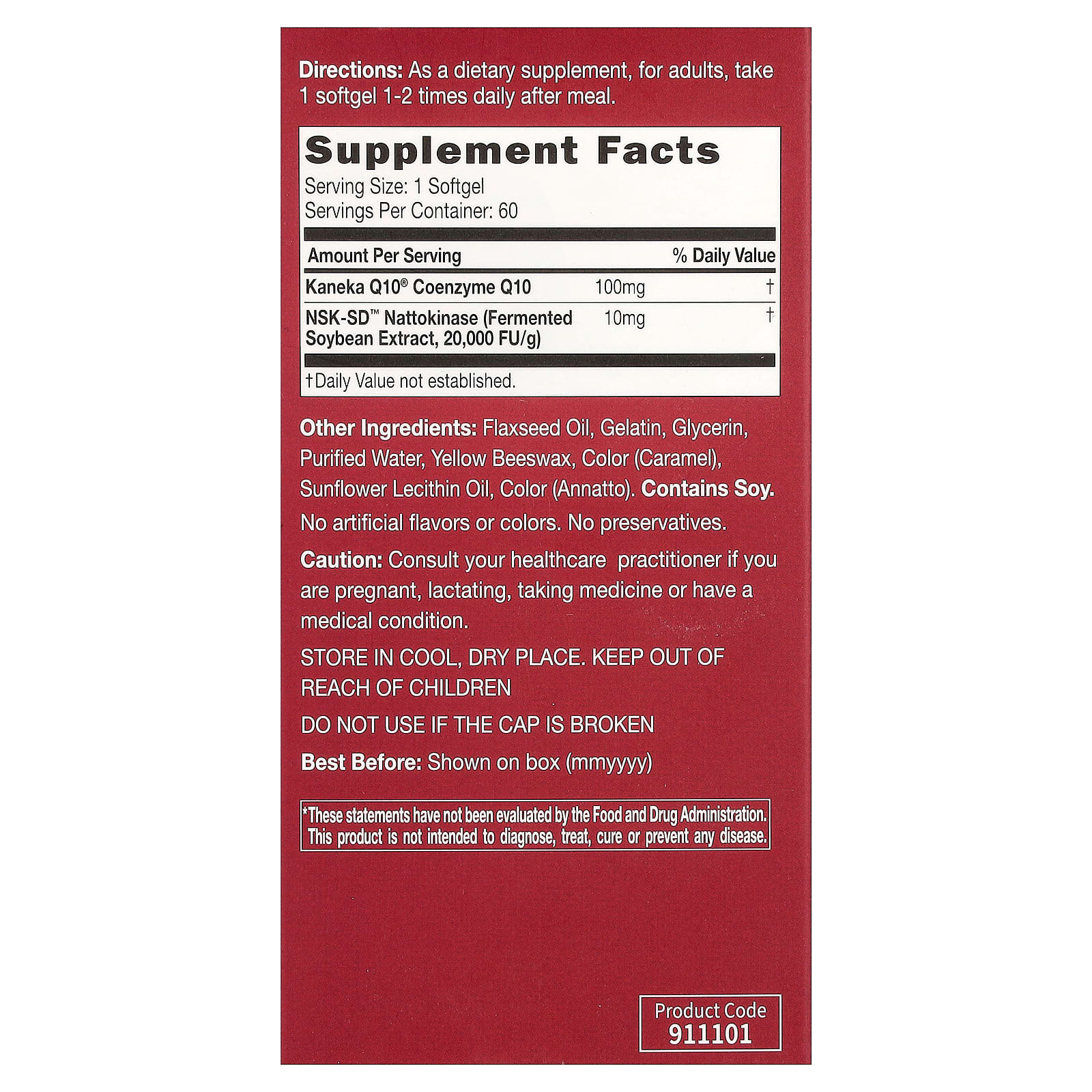
| Kaneka Q10 Coenzyme Q10 | 100mg | † |
| NSK-SD Nattokinase (as Fermented Soybean Extract, 20,000 FU/g) | 10mg | † |
Other ingredients: Flaxseed Oil, Gelatin, Glycerin, Purified Water, Yellow Beeswax, Color (Caramel), Sunflower Lecithin Oil, Color (Annatto). Contains Soy.
Where this label comes from
Read by Reverse Age Lab on 29 October 2026 from iherb.com, after the NIH stopped adding labels.
General information
- Product name
- Extra CoQ10
- Brand
- CATALO
- Barcode (UPC)
- Not printed
- Net contents
- 60 Softgels
- Market status
- On market
- Label ID
- s18007
Classification
- Supplement form
- Softgel Capsule
- Product type
- Botanical with Nutrients
- Claim types on the label
- Structure/Function
- Claims on the label
- Support Cardiovascular Health*, Maintain Cellular Energy Production*, Clinically Proven Ingredient, cGMP
Label statements
FDA Statement of Identity: Dietary Supplement
Directions: As a dietary supplement, for adults, take 1 softgel 1-2 times daily after meal.
Precautions: All Other: Caution: Consult your healthcare practitioner if you are pregnant, lactating, taking medicine or have a medical condition. DO NOT USE IF THE CAP IS BROKEN
Formula: Contains: Contains Soy.
Formulation: Does NOT Contain: No artificial flavors or colors. No preservatives.
Storage: STORE IN COOL, DRY PLACE. KEEP OUT OF REACH OF CHILDREN
Product Specific Information: Best Before: Shown on box (mmyyyy)
FDA Disclaimer Statement: *These statements have not been evaluated by the Food and Drug Administration. This product is not intended to diagnose, treat, cure or prevent any disease.
Seals/Symbols: Branded Clinically Proven Ingredient; cGMP
More labels from CATALO
Labels only: each label is shown as printed on the bottle, with no grades, rankings or advice. A label in this database is not an endorsement of the product. Read the label on the bottle you buy: makers change their formulas. Reverse Age Lab is not affiliated with, or endorsed by, the National Institutes of Health or its Office of Dietary Supplements. The original labels come from the NIH’s public-domain data; the labels since are read by us. Search the Dietary Supplement Label Database.