Product Overview
General Information
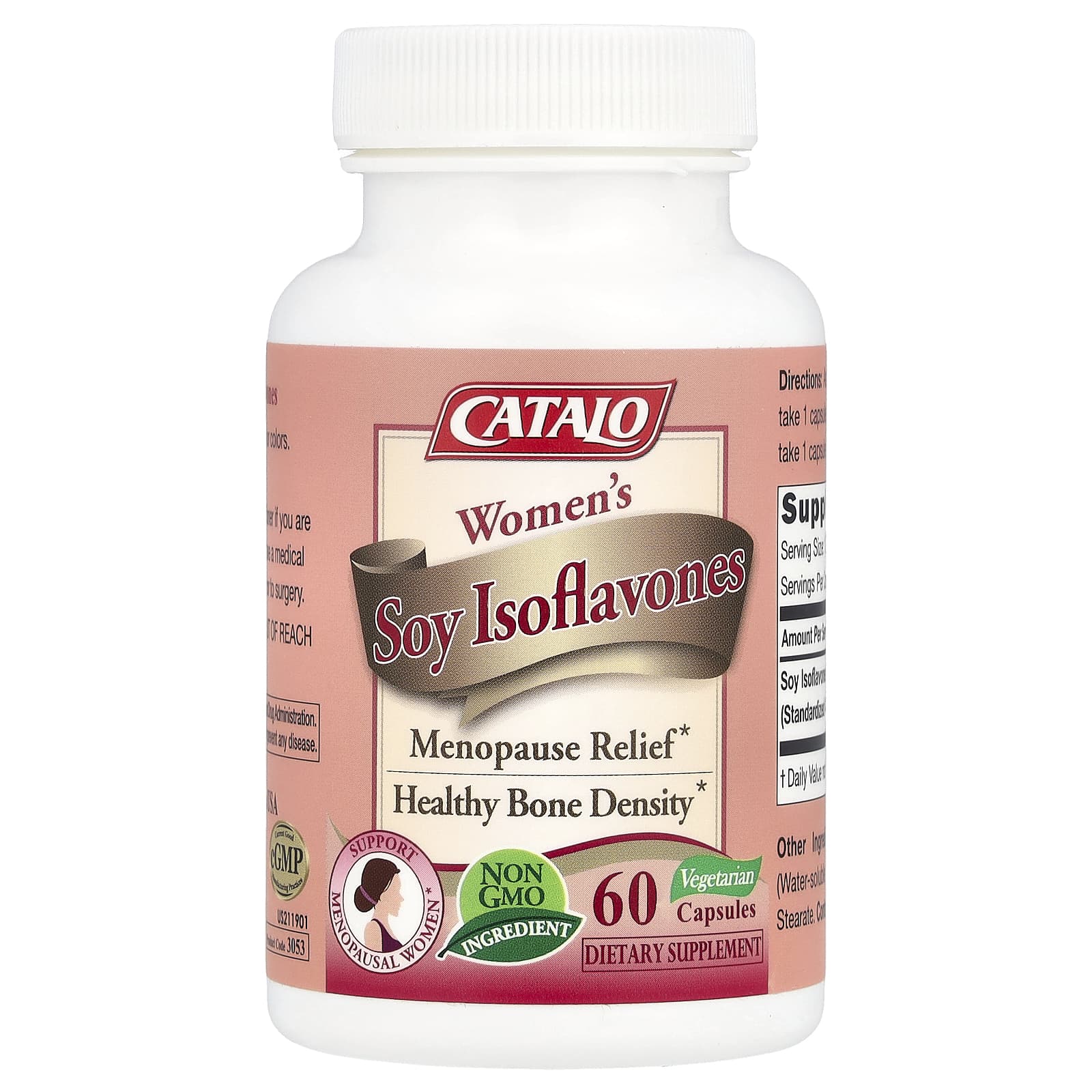
- Product Name
- Soy Isoflavones
- Brand
- CATALO Products in this brand
- Bar Code
- —
- Net Contents
- 60 Capsules
- Market Status
- On Market
- Date entered into DSLD
- 29 October 2026
- DSLD ID
- s18072
Product Classification
Label Information
Supplement Facts
- Daily Value (DV) Target Group(s)
- —
- Serving Size
- 1 Capsule
- Alternate Serving Size
- —
- Servings per Container
- 60
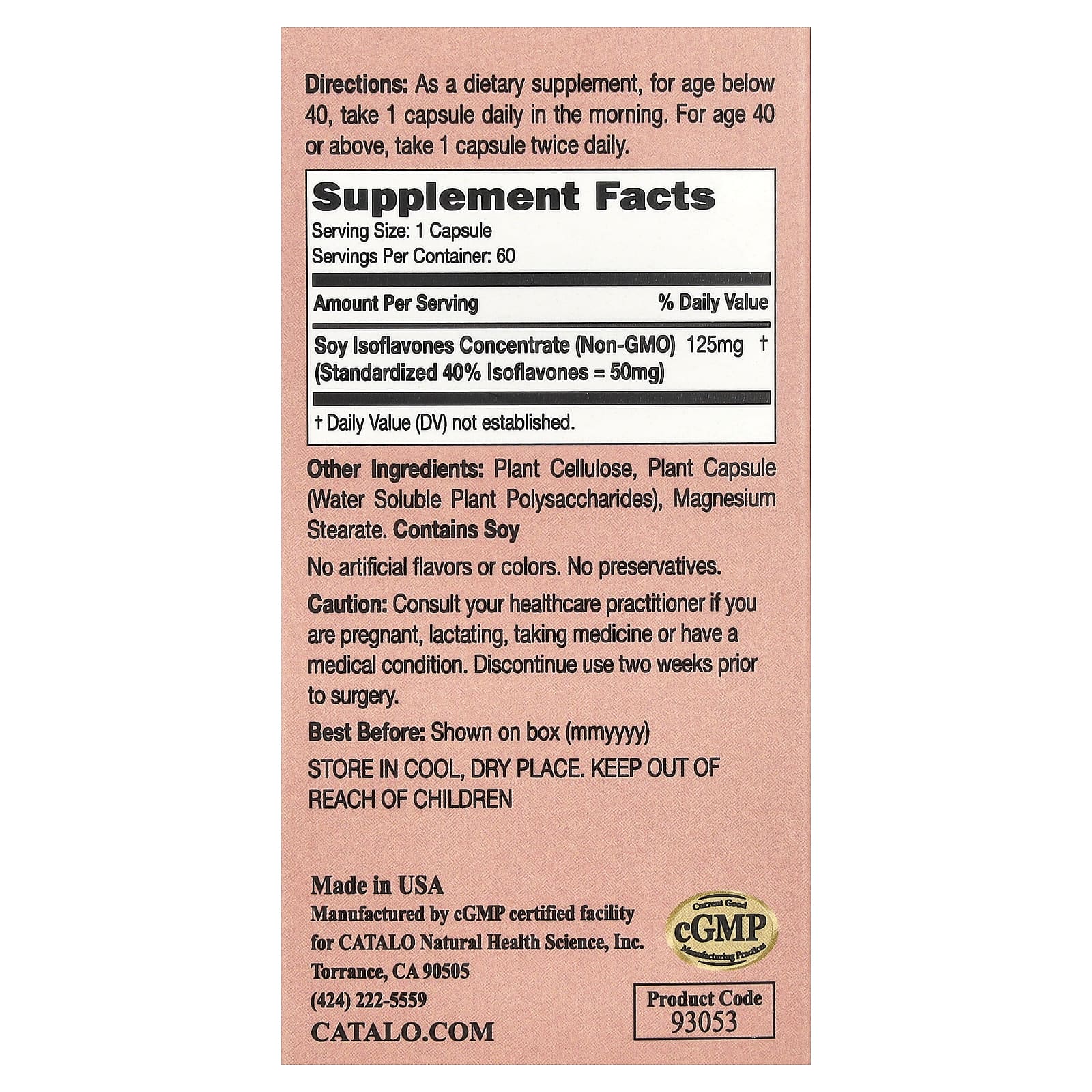
| Soy Isoflavones Concentrate (Non-GMO) (as Standardized 40% Isoflavones = 50mg) | 125mg | † |
Other ingredients: Plant Cellulose, Plant Capsule (Water Soluble Plant Polysaccharides), Magnesium Stearate. Contains Soy
Label Statements
FDA Statement of Identity: Dietary Supplement
Formula re: Contains: Contains Soy
Formulation re: Does NOT Contain: No artificial flavors or colors. No preservatives.
Seals/Symbols: cGMP (Current Good Manufacturing Practices)
Seals/Symbols: Non GMO Ingredient
Seals/Symbols: Vegetarian
Product Specific Information: Best Before: Shown on box (mmyyyy)
Suggested/Recommended/Usage/Directions: As a dietary supplement, for age below 40, take 1 capsule daily in the morning. For age 40 or above, take 1 capsule twice daily.
Precautions re: All Other: Caution: Consult your healthcare practitioner if you are pregnant, lactating, taking medicine or have a medical condition. Discontinue use two weeks prior to surgery.
Storage: STORE IN COOL, DRY PLACE. KEEP OUT OF REACH OF CHILDREN
Other: Product Code 93053
Brand Information
Manufactured by: cGMP certified facility for CATALO Natural Health Science, Inc., Torrance, CA 90505
Source: Reverse Age Lab, October 2026
More labels from CATALO
Other labels with this ingredient
Labels only: each label is shown as printed on the bottle, with no grades, rankings or advice. A label in this database is not an endorsement of the product. Read the label on the bottle you buy: makers change their formulas. Reverse Age Lab is not affiliated with, or endorsed by, the National Institutes of Health or its Office of Dietary Supplements. The original labels come from the NIH’s public-domain data; the labels since are read by us. Search the Dietary Supplement Label Database.