
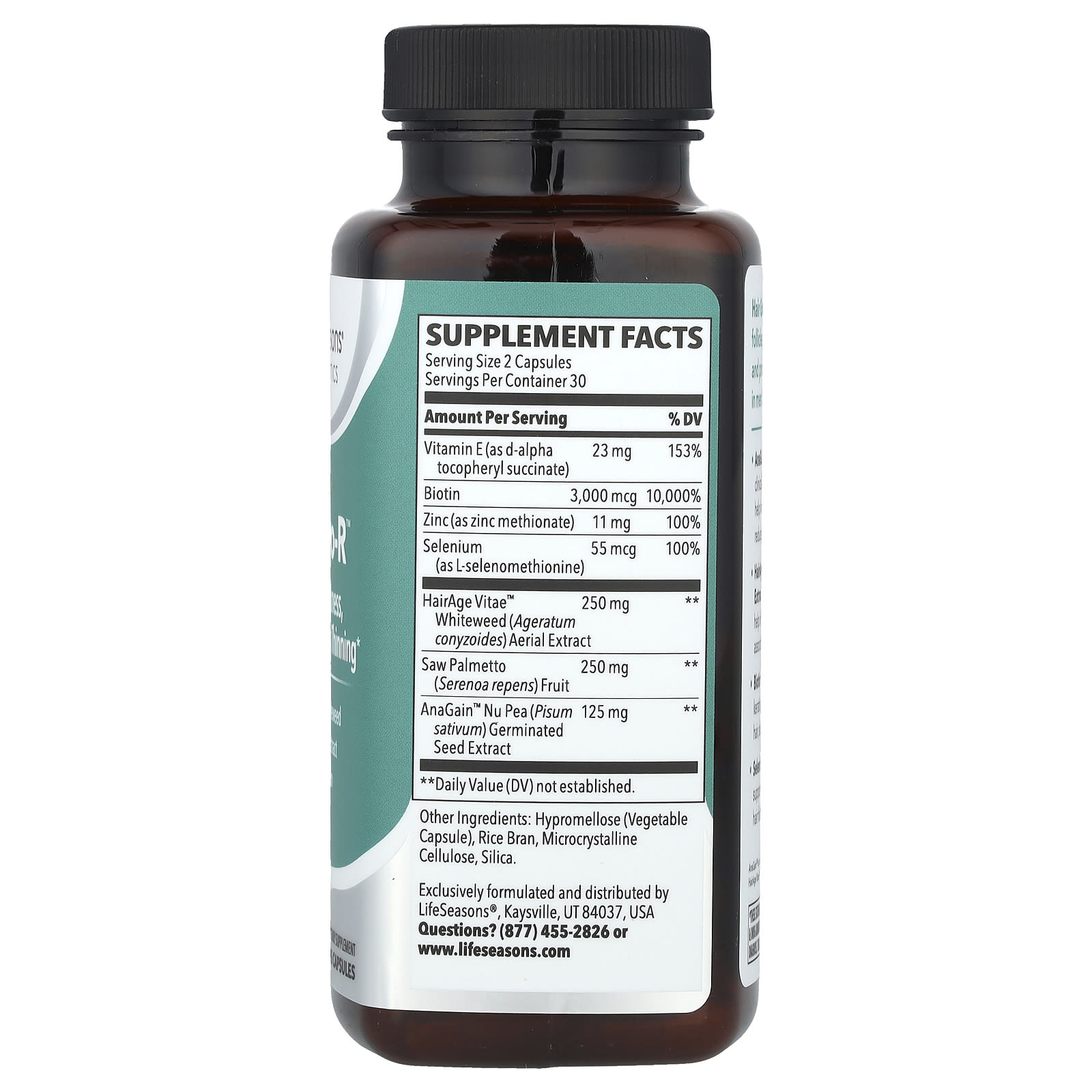
| Vitamin E (as as d-alpha tocopheryl succinate) | 23 mg | 153% |
| Biotin | 3,000 mcg | 10,000% |
| Zinc (as as zinc methionate) | 11 mg | 100% |
| Selenium (as as L-selenomethionine) | 55 mcg | 100% |
| HairAge Vitae Whiteweed (Ageratum conyzoides) Aerial Extract | 250 mg | ** |
| Saw Palmetto (Serenoa repens) Fruit | 250 mg | ** |
| AnaGain Nu Pea (Pisum sativum) Germinated Seed Extract | 125 mg | ** |
Other ingredients: Hypromellose (Vegetable Capsule), Rice Bran, Microcrystalline Cellulose, Silica.
% Daily Values for: Adults and children 4 or more years of age.
Where this label comes from
Read by Reverse Age Lab on 29 October 2026 from iherb.com, after the NIH stopped adding labels.
General information
- Product name
- Hair Gro-R
- Brand
- LifeSeasons Therapeutics
- Barcode (UPC)
- 8 10034 44211 6
- Net contents
- 60 Veg Capsules
- Market status
- On market
- Label ID
- s46346
Classification
- Supplement form
- Capsule
- Product type
- Botanical with Nutrients
- Claim types on the label
- Structure/Function
- Claims on the label
- Supports Thickness, Growth & Less Thinning*
Label statements
Other: *These statements have not been evaluated by the Food and Drug Administration. This product is not intended to diagnose, treat, cure or prevent any disease.
Brand information
Exclusively formulated and distributed by: LifeSeasons, Kaysville, UT 84037, USA
More labels from LifeSeasons Therapeutics
Labels only: each label is shown as printed on the bottle, with no grades, rankings or advice. A label in this database is not an endorsement of the product. Read the label on the bottle you buy: makers change their formulas. Reverse Age Lab is not affiliated with, or endorsed by, the National Institutes of Health or its Office of Dietary Supplements. The original labels come from the NIH’s public-domain data; the labels since are read by us. Search the Dietary Supplement Label Database.