
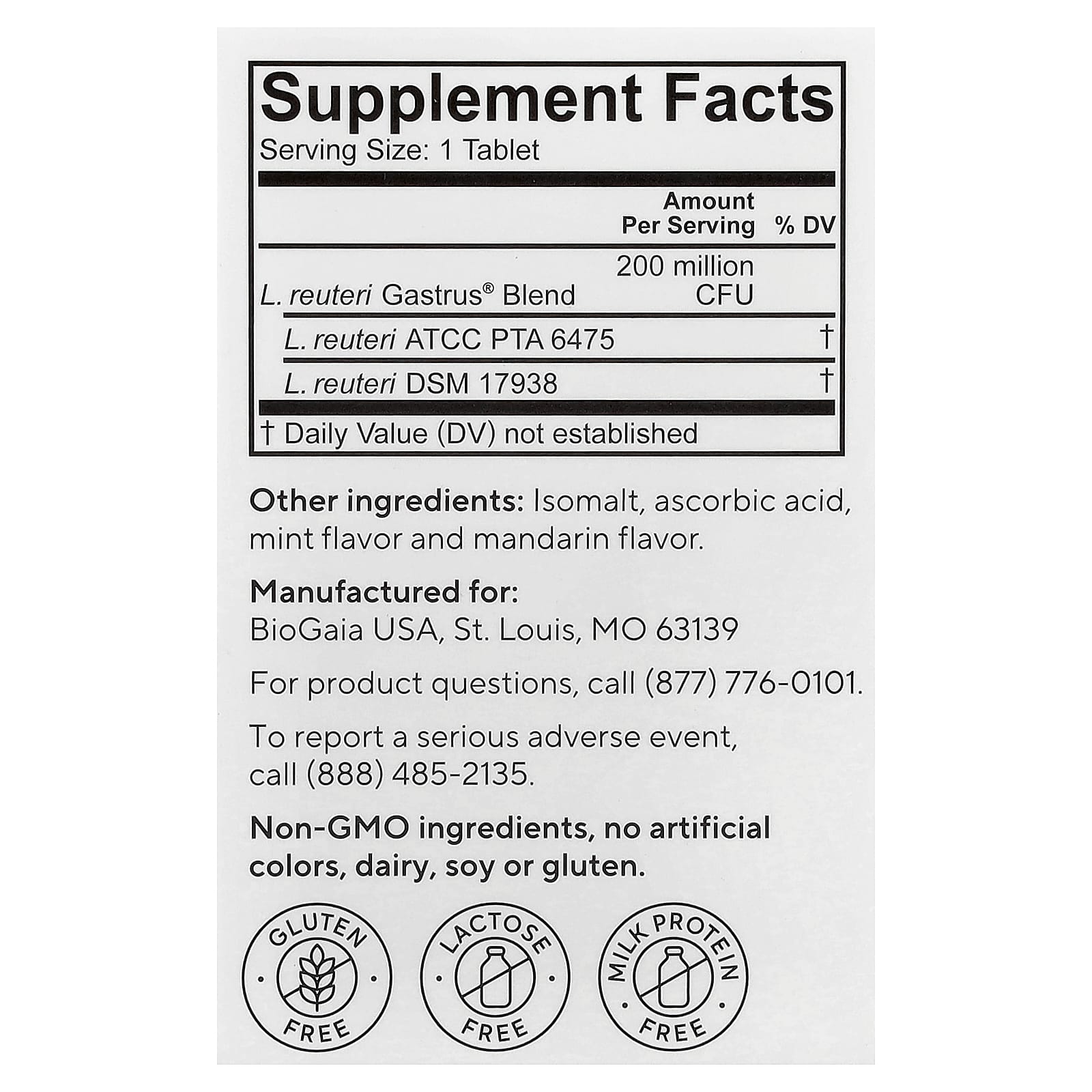
| L. reuteri Gastrus® Blend | 200 million CFU | † |
| L. reuteri (as ATCC PTA 6475) | † | |
| L. reuteri (as DSM 17938) | † |
Other ingredients: Isomalt, ascorbic acid, mint flavor and mandarin flavor.
Where this label comes from
Read by Reverse Age Lab on 30 October 2026 from iherb.com, after the NIH stopped adding labels.
General information
- Product name
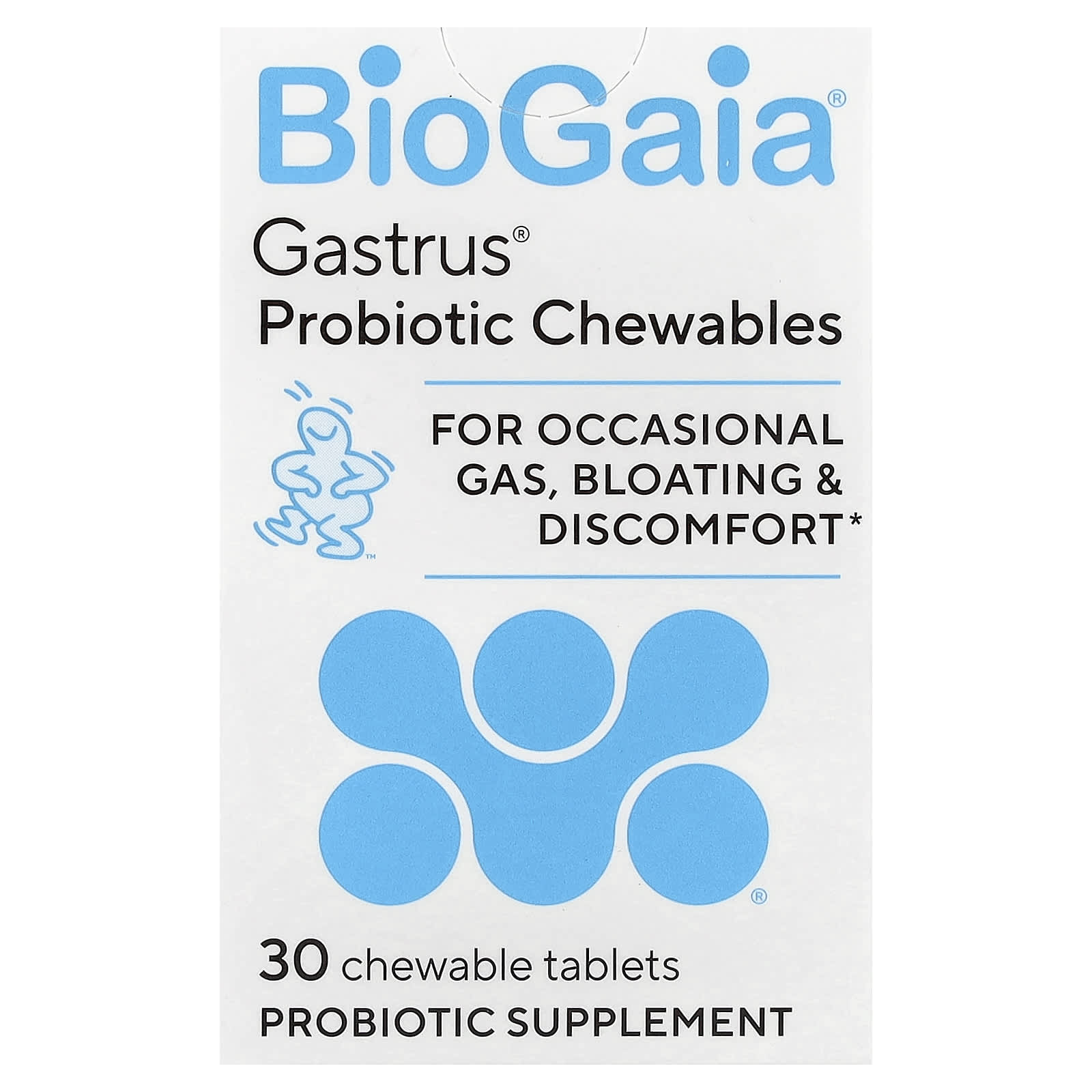
- Gastrus® - Probiotic Capsules
- Brand
- BioGaia
- Barcode (UPC)
- 6 02359 46060 5
- Net contents
- 30 Chewable Tablets
- Market status
- On market
- Label ID
- s69610
Classification
- Supplement form
- Tablet or Pill
- Product type
- Botanical
- Claim types on the label
- Structure/Function, All Other
- Claims on the label
- Non-GMO, Gluten Free, Lactose Free, Milk Protein Free, No artificial colors, Dairy free, Soy free
Label statements
FDA Statement of Identity: Probiotic Supplement
Directions: Adults: Use 1-2 chewable tablets daily. Use regularly for digestive health.
Formula: Contains: Non-GMO ingredients, no artificial colors, dairy, soy or gluten.
Seals/Symbols: Gluten Free; Lactose Free; Milk Protein Free
Product Specific Information: For occasional gas, bloating & discomfort*
Storage: Store in a dry place at room temperature. Keep out of reach of children.
FDA Disclaimer Statement: *These statements have not been evaluated by the Food and Drug Administration. This product is not intended to diagnose, treat, cure, or prevent any disease.
Other: To report a serious adverse event, call (888) 485-2135.
Other: For product questions, call (877) 776-0101.
Brand information
Manufactured for: BioGaia USA, St. Louis, MO 63139
Licensed by: BioGaia, P.O. Box 3242, 103 64 Stockholm, Sweden
More labels from BioGaia
Labels only: each label is shown as printed on the bottle, with no grades, rankings or advice. A label in this database is not an endorsement of the product. Read the label on the bottle you buy: makers change their formulas. Reverse Age Lab is not affiliated with, or endorsed by, the National Institutes of Health or its Office of Dietary Supplements. The original labels come from the NIH’s public-domain data; the labels since are read by us. Search the Dietary Supplement Label Database.