
| decaffeinated Ceylon Black Tea | ||
| organic Ginger root pieces | ||
| Lemon Verbena | ||
| organic Lemon peel pieces |
Other ingredients: All Natural fruit flavors
% Daily Values for: Adults and children 4 or more years of age.
Where this label comes from
An original label of the NIH's Dietary Supplement Label Database, entered there on 25 February 2021, shown here as it was entered. The NIH's record
General information
- Product name
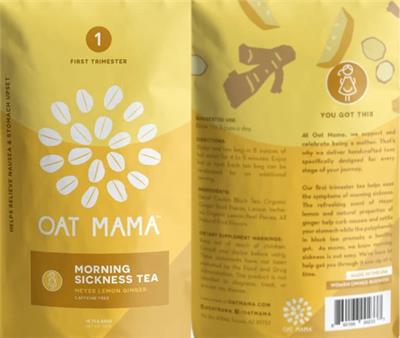
- Morning Sickness Tea Meyer Lemon Ginger
- Brand
- Oat Mama
- Barcode (UPC)
- 8 60166 00233 7
- Net contents
- 14 Tea Bag(s); 32 Gram(s)
- Market status
- Off market
- DSLD ID
- 242437
Classification
- Supplement form
- Other (e.g. tea bag)
- Product type
- Botanical
- Claim types on the label
- All Other, Structure/Function
- Intended for
- Pregnant Women
Label statements
Formulation: Does NOT Contain: Caffeine free
Directions: Suggested use: Drink 1 to 3 cups a day.
Directions: Directions: Steep one tea bag in 8 ounces of hot water for 4 to 5 minutes. Enjoy hot or iced. Each tea bag can be re-steeped for an additional serving.
Precautions: Children: Dietary Supplement Warnings: Keep out of reach of children.
Precautions: All Other: Consult your doctor before using.
Formula: Contains: The refreshing scent of Meyer lemon ad natural properties of ginger help curb nausea and settle your stomach while the polyphenols in black tea promote a healthy gut.
Brand information
Manufacturer: Oat Mama, Tucson, AZ
More labels from Oat Mama
Labels only: each label is shown as printed on the bottle, with no grades, rankings or advice. A label in this database is not an endorsement of the product. Read the label on the bottle you buy: makers change their formulas. Reverse Age Lab is not affiliated with, or endorsed by, the National Institutes of Health or its Office of Dietary Supplements. The original labels come from the NIH’s public-domain data; the labels since are read by us. Search the Dietary Supplement Label Database.